
KING’S LYNN TO MIDDLETON TOWERS

To navigate the route, kindly use the navigational icons below, which correspond to each part of the route.
King’s Lynn Station
Back in the day, the station was just a basic wooden structure, opened in 1846, along with the Lynn Ely line and the Lynn Dereham line.
Another branch, starting from King's Lynn, began operating in 1848 and provided transportation services to Wisbech and March, leaving the Lynn Ely line at Watlington, then called Magdalen Road.
In 1864, the Lynn Sutton bridge line opened.
Furthermore, the Hunstanton line originating from King's Lynn was established in 1862,
In 1879, the Lynn Fakenham line was constructed.
In 1871, several companies collaborated to create a more durable station, resulting in the terminal we see today.
The recently built station now has two island platforms, each with four dead-end lines.
It has replaced the old wooden structure that previously stood in its place.
South Lynn M&GN station was built in 1886, taking the Lynn Fakenham and Sutton Bridge services to South Lynn with the newly built Lynn avoiding line.
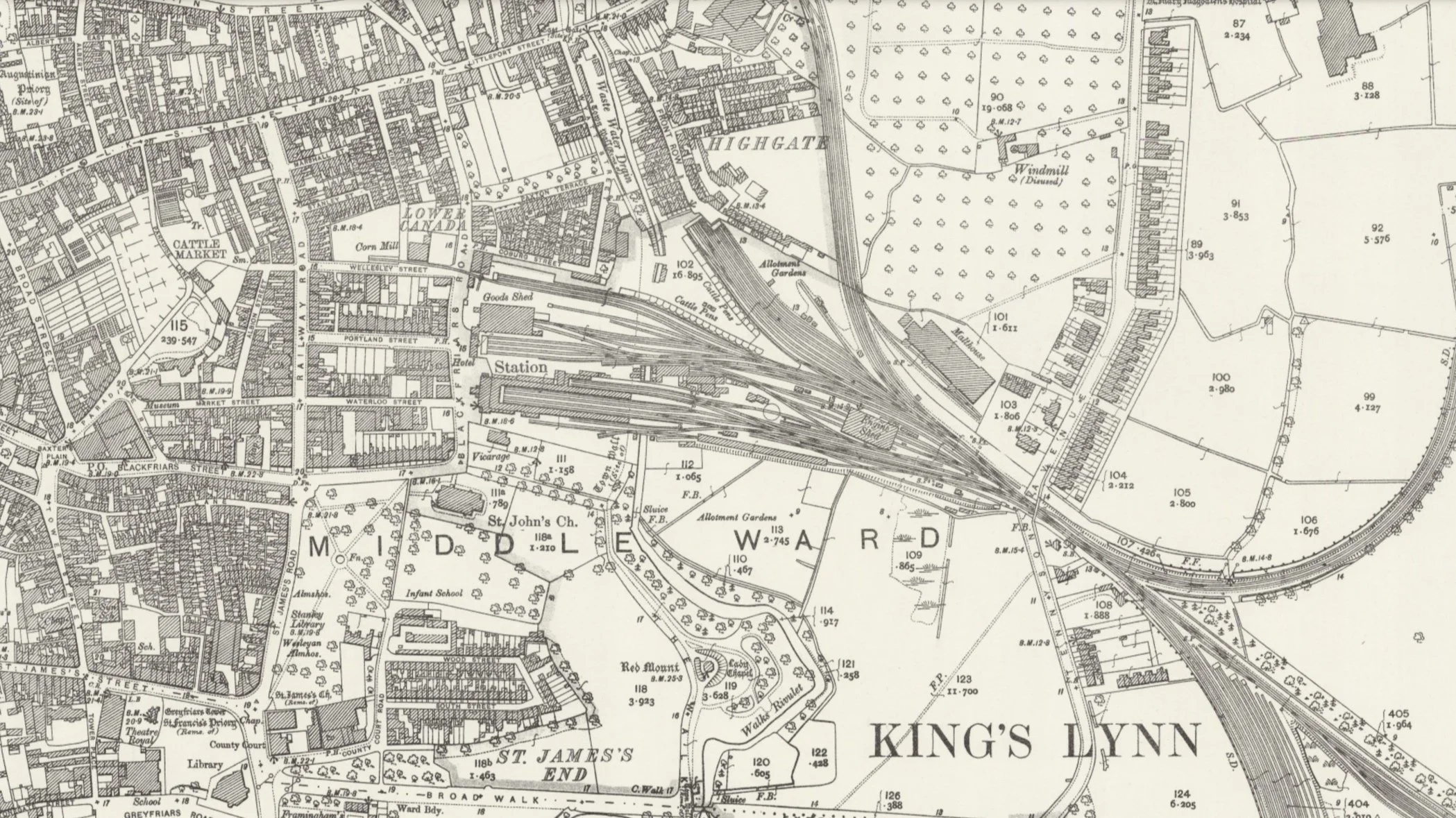
At the end of King's Lynn station, there was a vast goods yard that could be accessed only via the King's Lynn junction, controlled by the signal box. Furthermore, a junction connected the railway to the Lynn Docks branch.
Between the goods lines and the bay platforms lay King's Lynn's engine sheds. This brick-built structure featured four roads and accommodated a variety of engines, including numerous royal engines. By the 1950s, the sheds were capable of accommodating many locomotives. However, in 1959, the sheds were closed to steam locomotives.
Access to the sheds was only possible through the junction near the signal box.
During the early days of the station, there was a signal box located at the end of the platforms in King's Lynn, along with a significant semaphore signal system.
As the trains left King's Lynn, they passed by the engine sheds and goods yards before reaching King's Lynn Junction. At the junction, they continue straight ahead, crossing underneath the footbridge constructed in the latter days. On the left, you can see the Hunstanton Branch, while the Ely-Cambridge line heads off to the right.
Now on its dedicated line, the Dereham line quickly heads towards its next station, Middleton Towers, through open countryside.
At the junction, there was the second signal box, King’s Lynn Junction Box. The King’s Lynn Junction box was said to have housed an 80-lever frame.
When writing this page, King’s Lynn still operates at a working mainline station with services towards Ely, Cambridge and London with hourly services to the capital.
Currently, there is only one signal box remaining. There have been discussions about establishing a central control centre at Cambridge, which would render all signal boxes obsolete. It is still being determined how long the remaining signal box will remain operational.
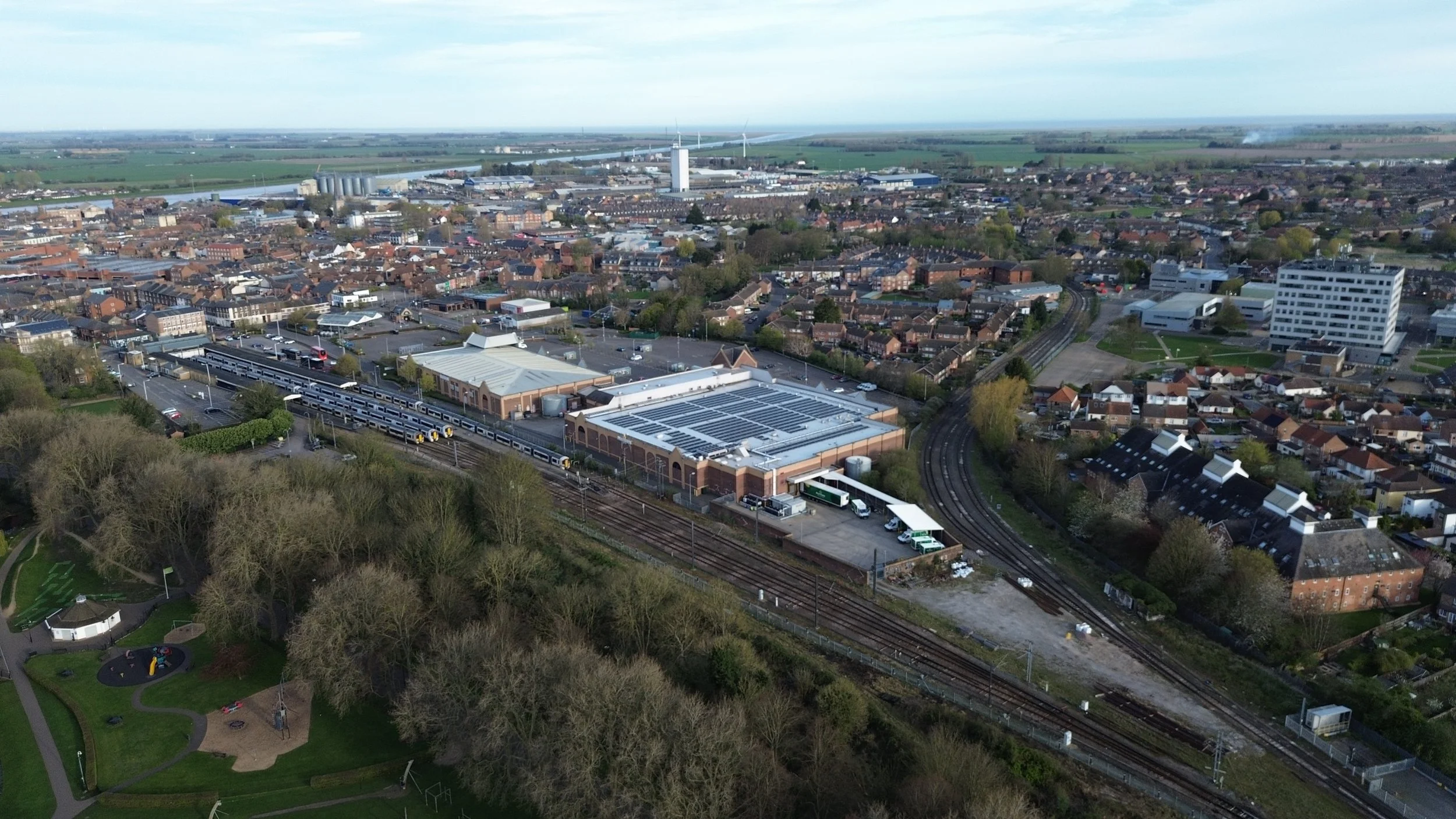
The Goods Yard and engine sheds have undergone significant changes, with most of them being torn down and replaced by a supermarket and retail establishments. However, a portion of it remains in use as a turnaround point for freight services bound for Middleton Towers via the old Docks branch track.
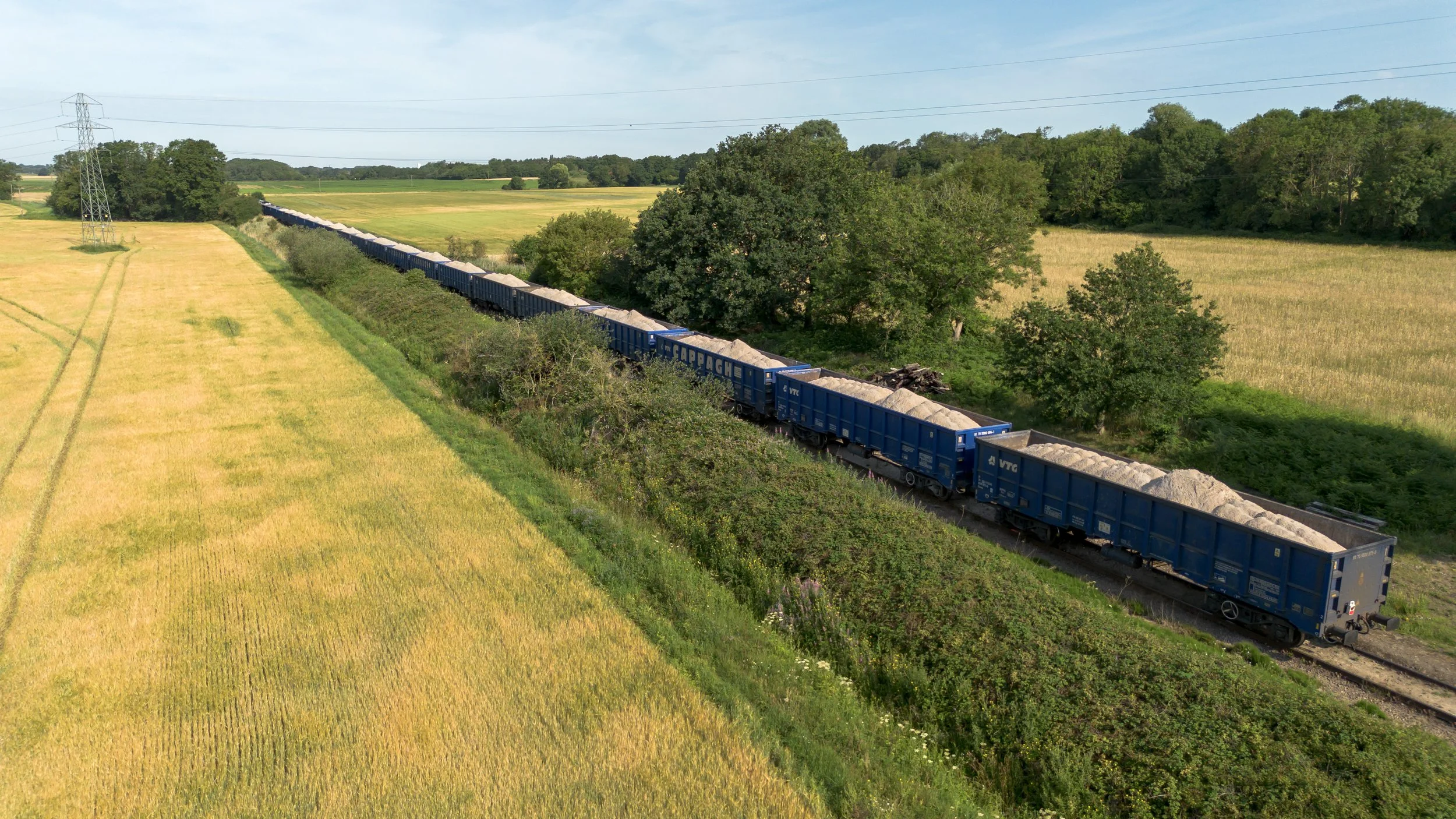
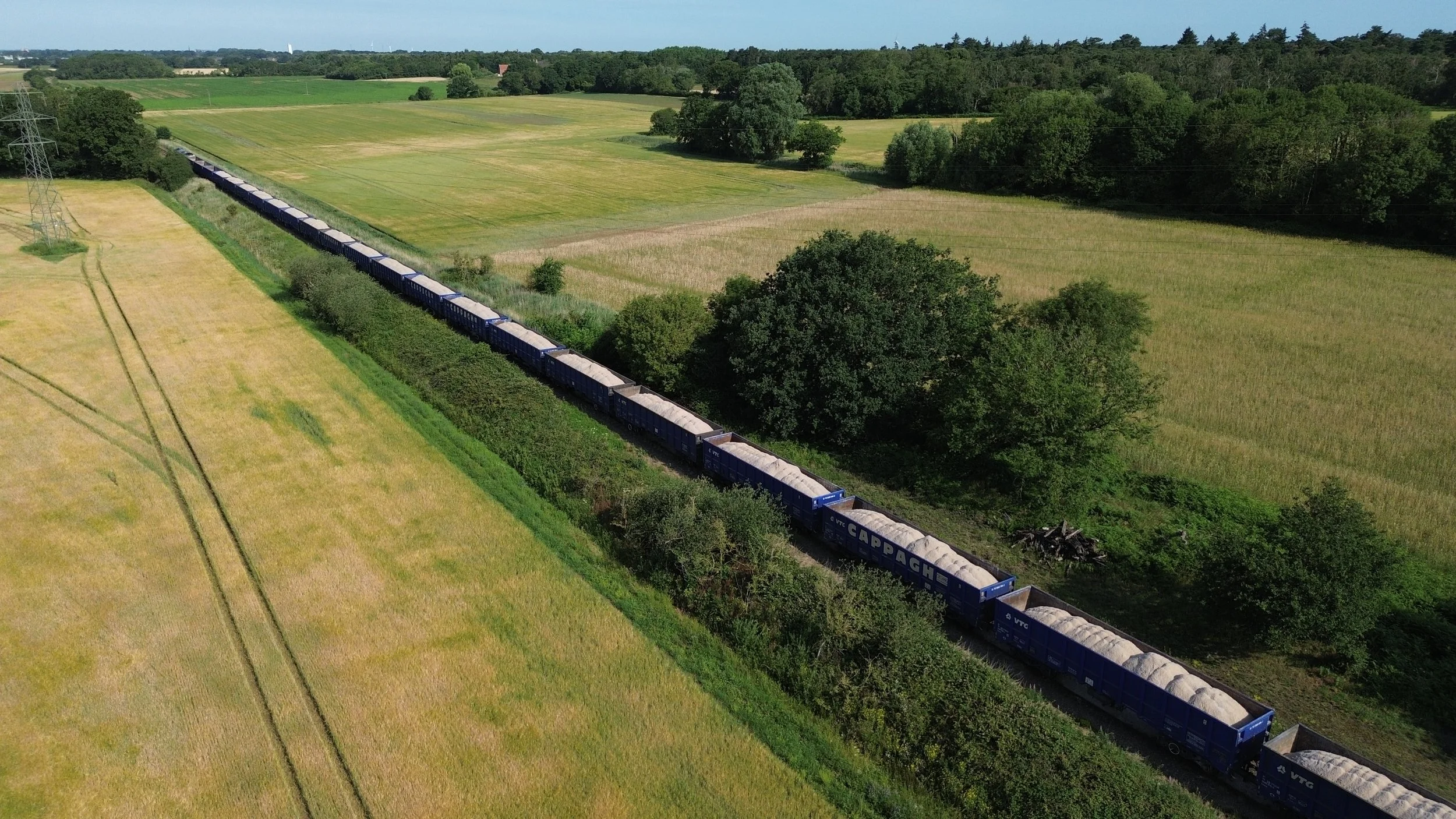
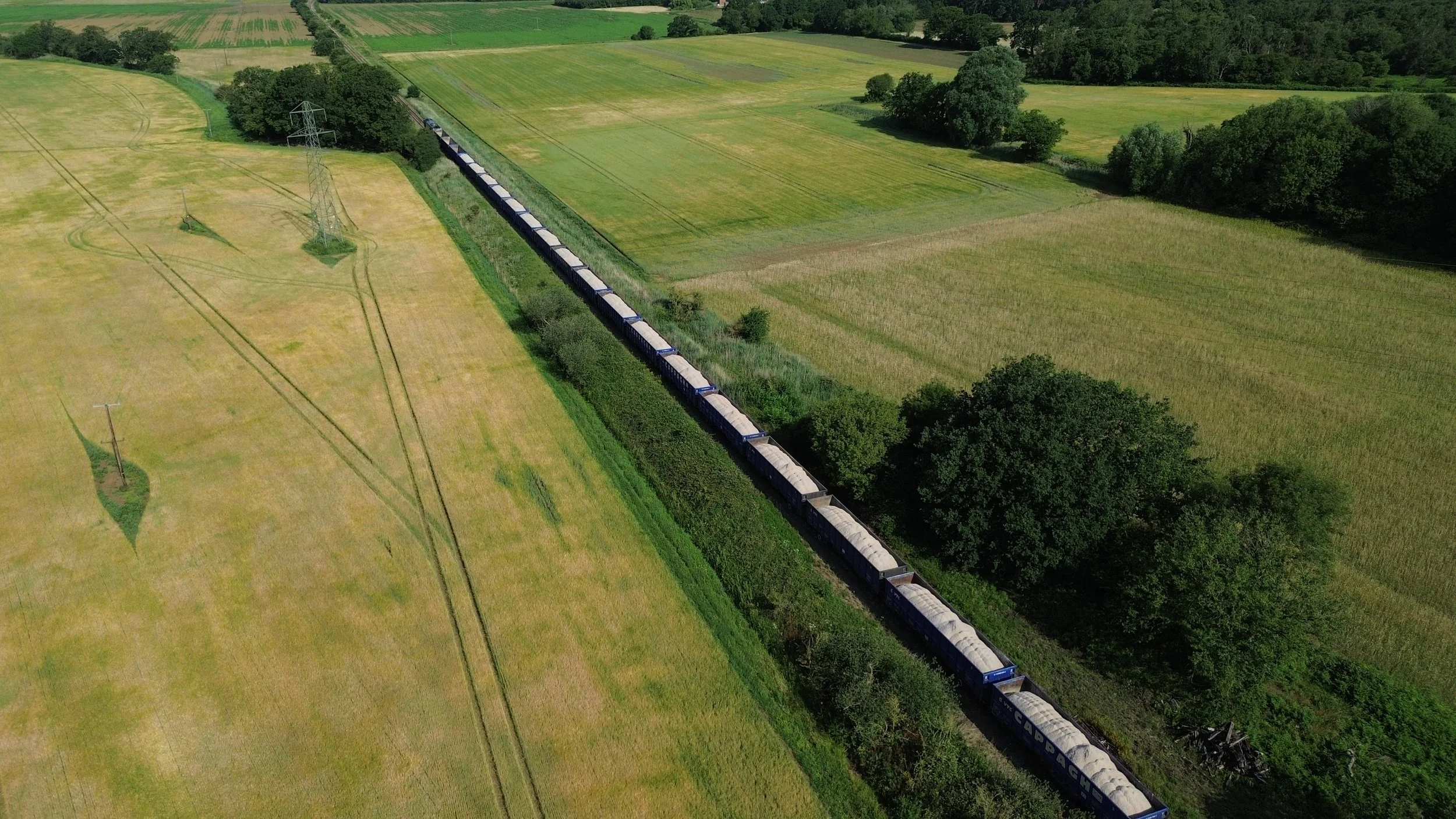
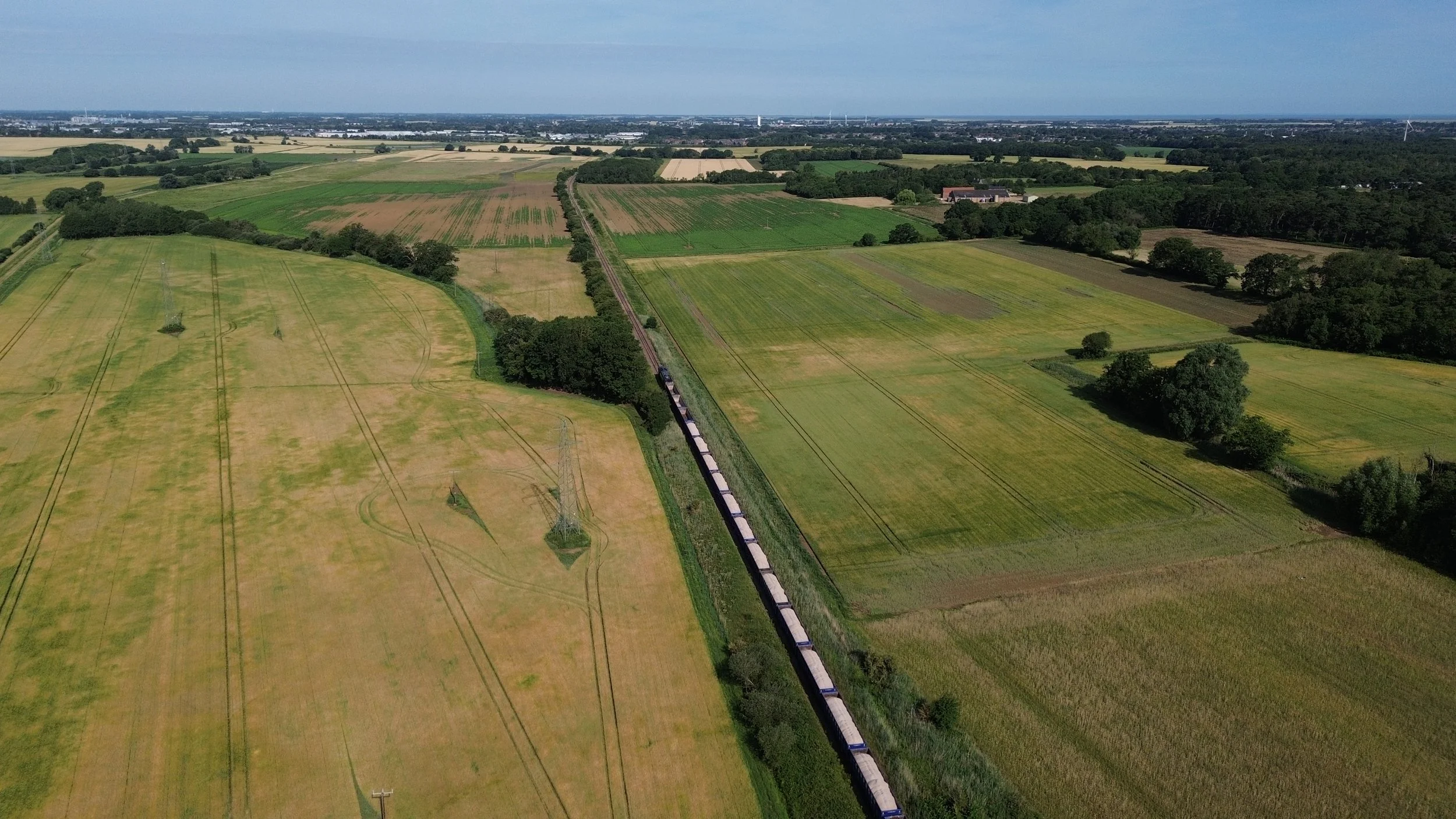
At present, the section of the former Dereham railway line leading up to Middleton Towers is utilised as a freight line serving the sand quarry.
In 2020, a portion of the old Dereham line near the King's Lynn junction was renovated to provide stabling points for 8-car units.
Timeline
In 1846, the Lynn Ely line and the Lynn Dereham railway opened partially, operating from King’s Lynn wooden-built station.
In 1862, the Lynn Hunstanton Railway opened.
In 1871, the newly built station, which is still in use today, opened.
In 1886, the M&GN South Lynn Station opened.
In 1911, the station changed its name from Lynn to King's Lynn.
1959 The M&gnjr line closes.
In 1968, the Dereham branch closed.
In May 1969, the Hunstanton branch closed.
In 1992, the line to London King's Cross was electrified between London King's Cross & Cambridge.
King’s Lynn Dated 1798-1978
Long before the railway ever arrived.

©National Library of Scotland
King’s Lynn station historic maps.
The historic maps below show King’s Lynn station before the removal of many sidings and goods sheds, which were replaced by a supermarket.

Google Maps modern-day coverage.
Kings Lynn station aerial
Views past & present
I would like to express my gratitude to Historic England for providing the Embed codes that enabled me to use the aerial photos displayed below.
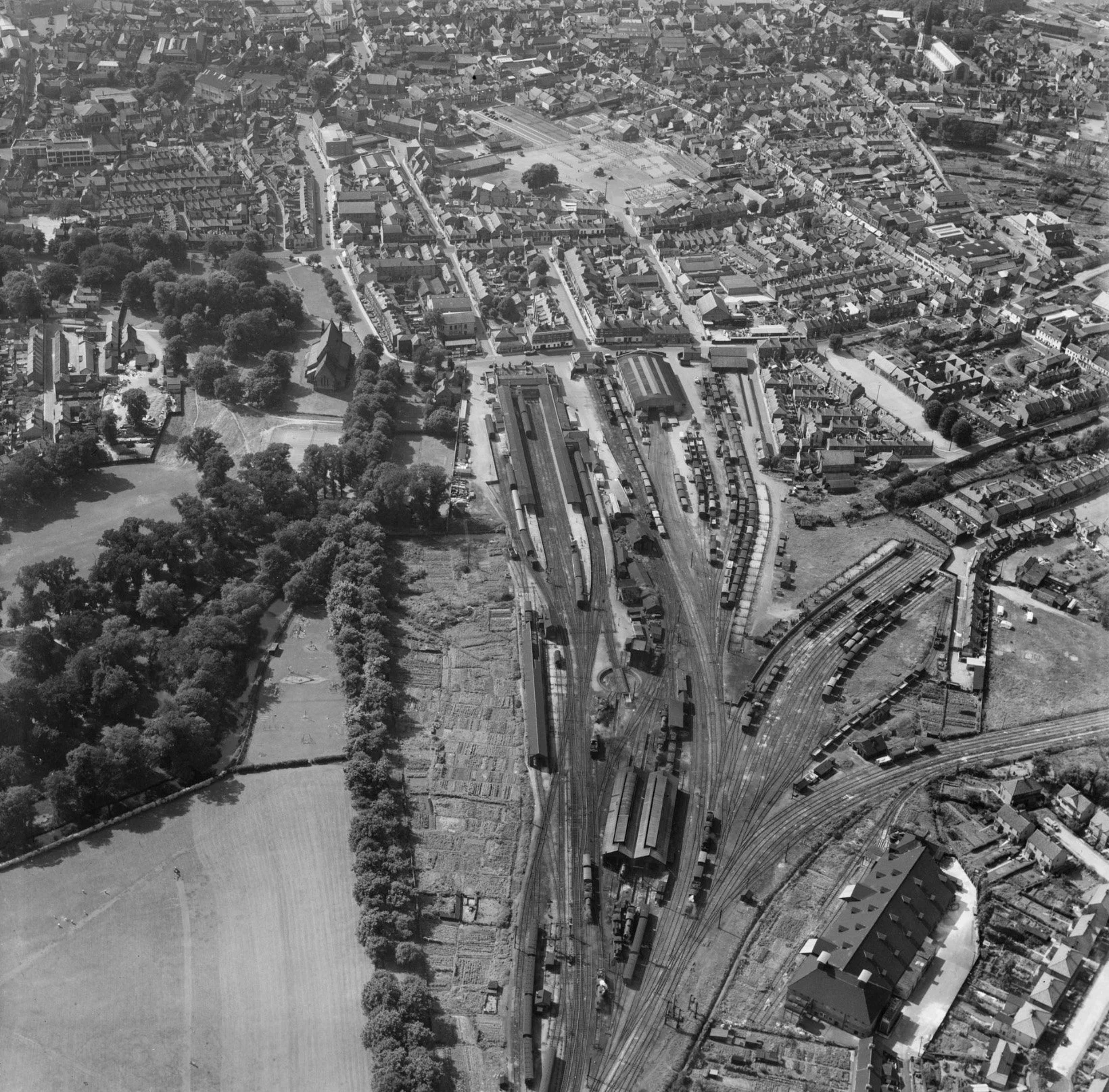
Thanks to Historic England for the aerial photo. Please click on the photo for a link to the source page.

Photographer unknown

Thanks to Historic England for the aerial photo. Please click on the photo for a link to the source page.
Drone coverage taken Easter Monday 2025
King’s Lynn station past & present
King’s Lynn railway station in the early 1900s

Year and Photographer unknown.
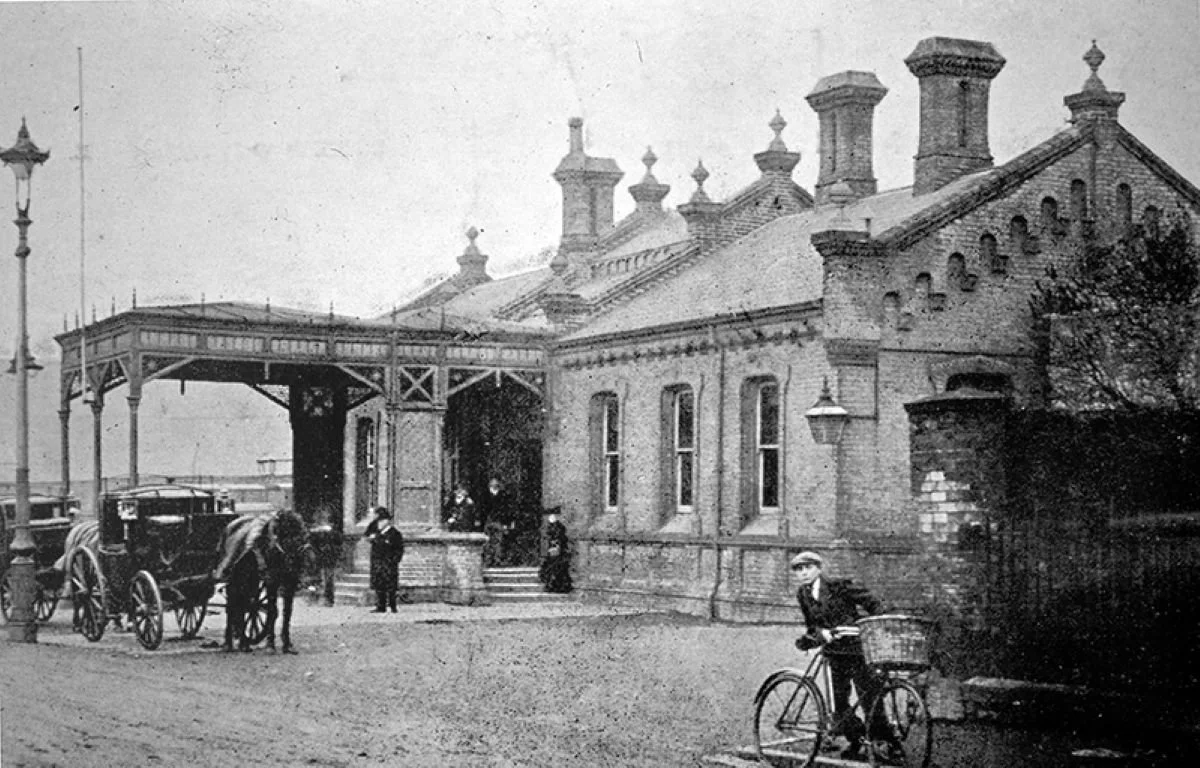
Year and Photographer unknown.
King’s Lynn railway station, roughly in the late 1960s

King’s Lynn railway station Photographed in 2020


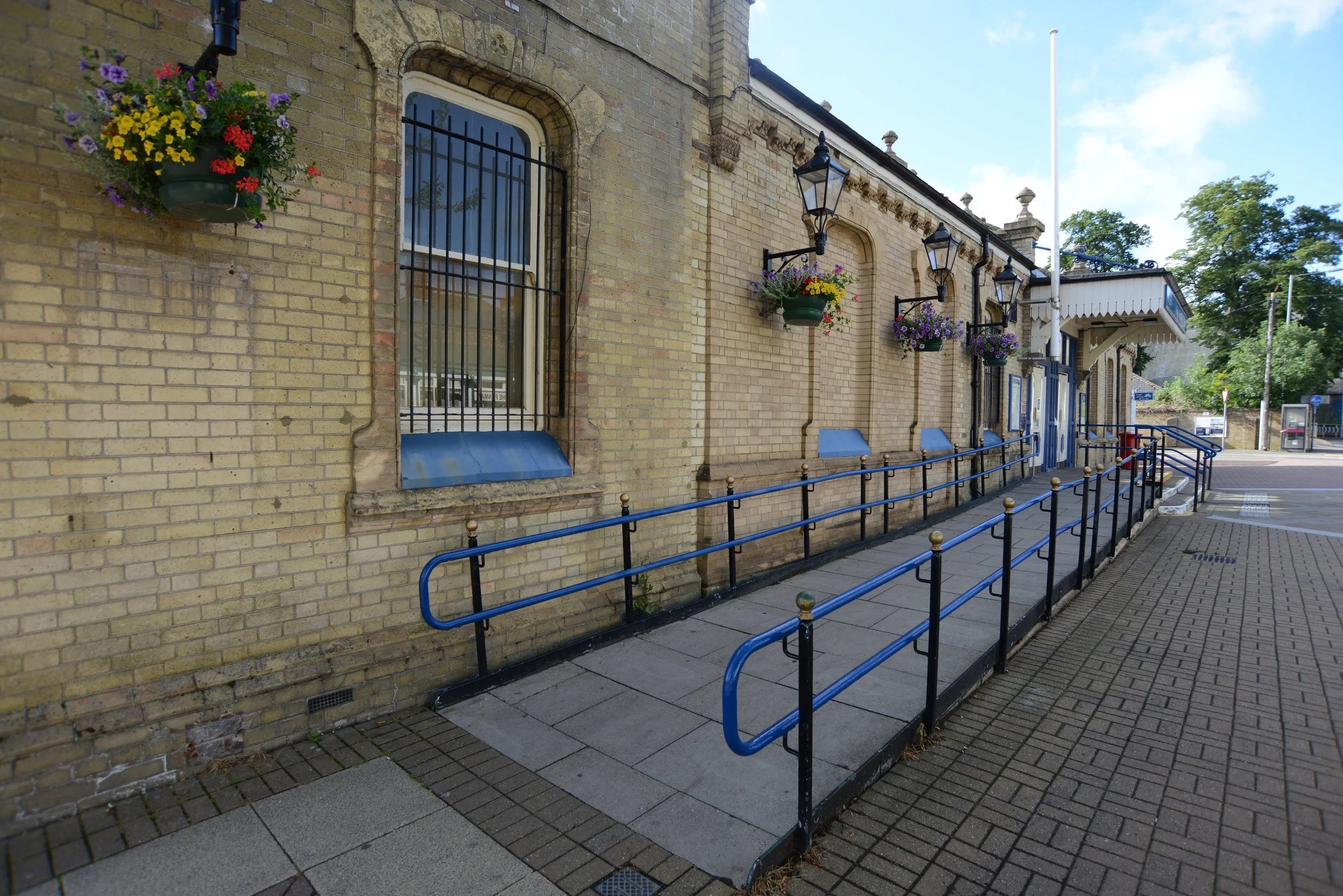

King’s Lynn station Foyer, the year is unknown, but in the Days of LNER, with destinations to Dereham, Hunstanton, Wisbech, March & London Liverpool Street.

Sourced from FaceBook Under licence Credit-Photographer and year unknown
King’s Lynn Foyer, year unknown.
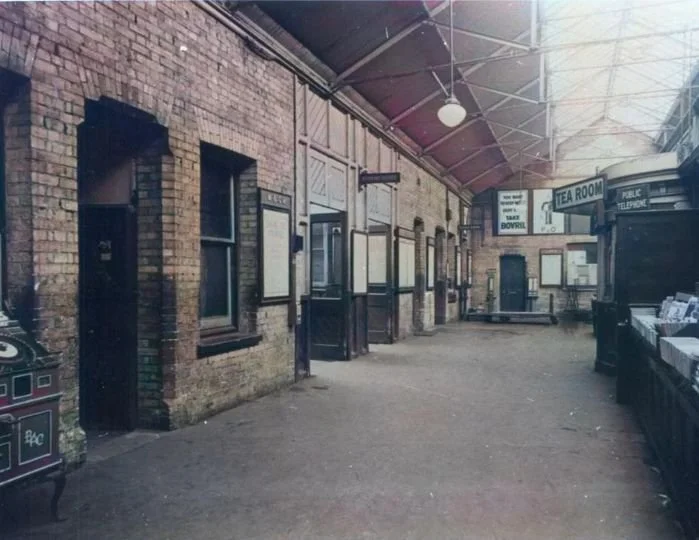
Photographer unknown.
King’s Lynn waiting room.
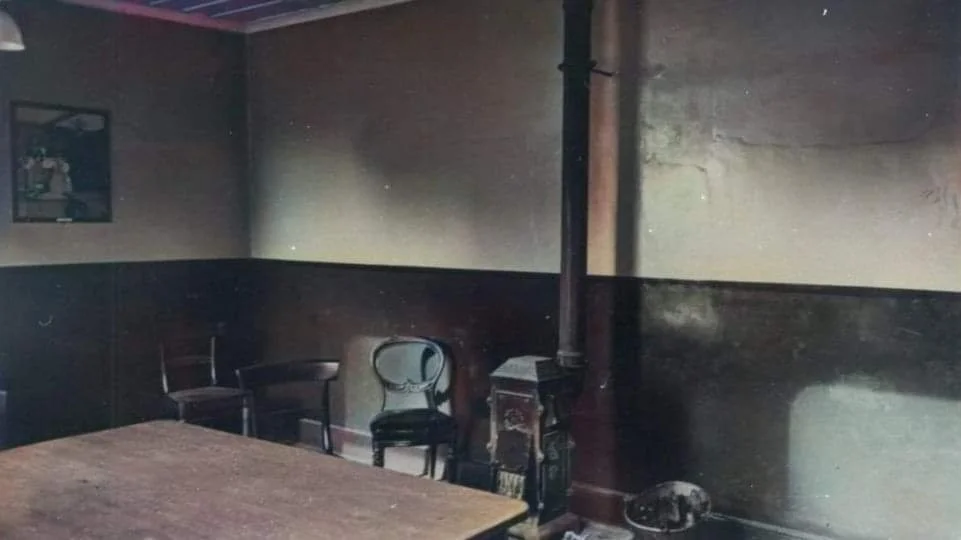
Year & Photographer unknown.
King’s Lynn station foyer and cafe in 2023

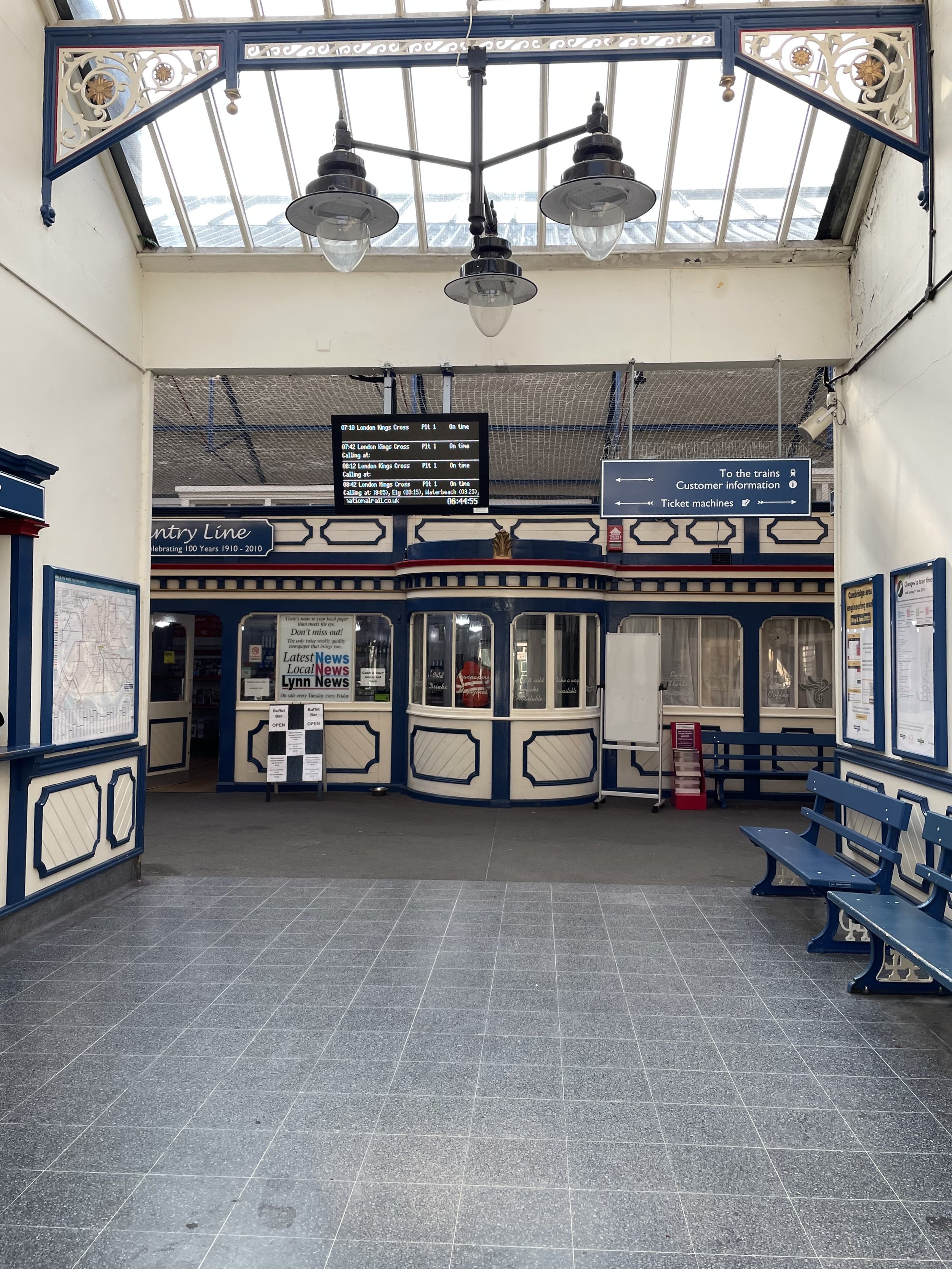
Railway memorabilia on display at King's Lynn.


King’s Lynn railway station platforms and goods area from the past.
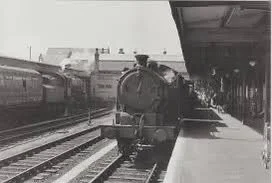
This photo shows a steam excursion train arriving at King's Lynn during the 1950s. It is believed that this train was the Hunstanton excursion service. This historic photo also features the Signal box and one of the semaphore signals.

King's Lynn and area Model by J T Colquhoun
King's Lynn and area Model by J T Colquhoun
Dereham or Hunstanton Bound service is about to depart from King’s Lynn.

Year & Photographer unknown.
Year & Photographer unknown.
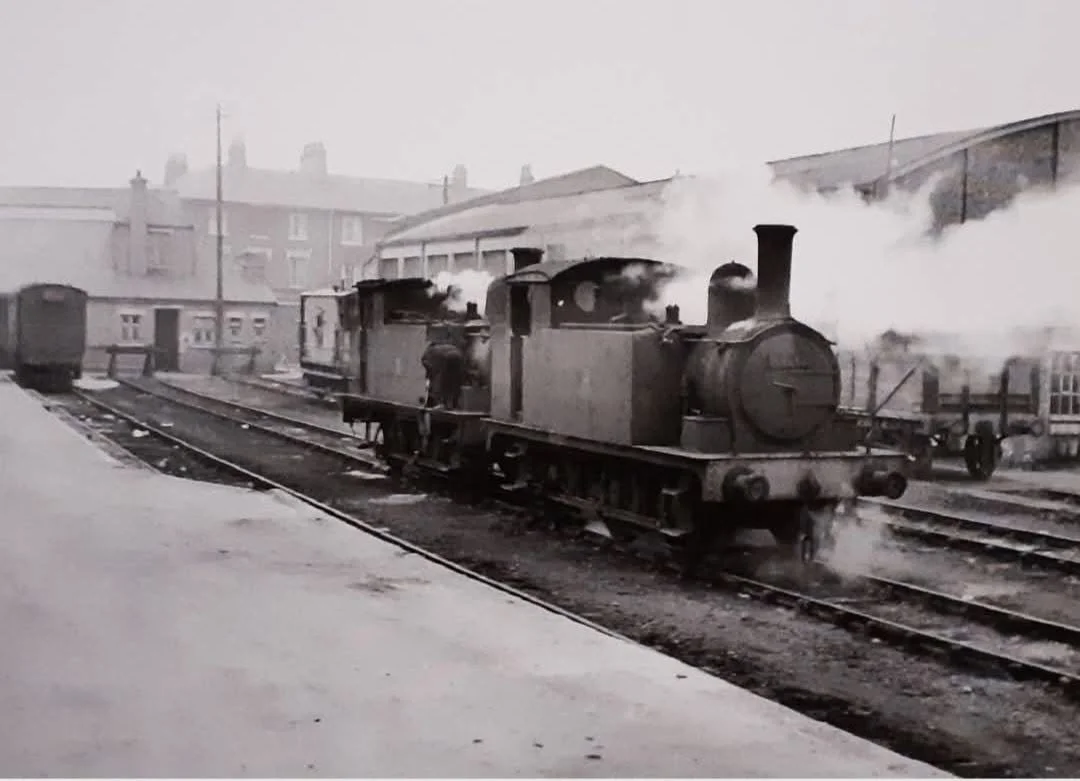
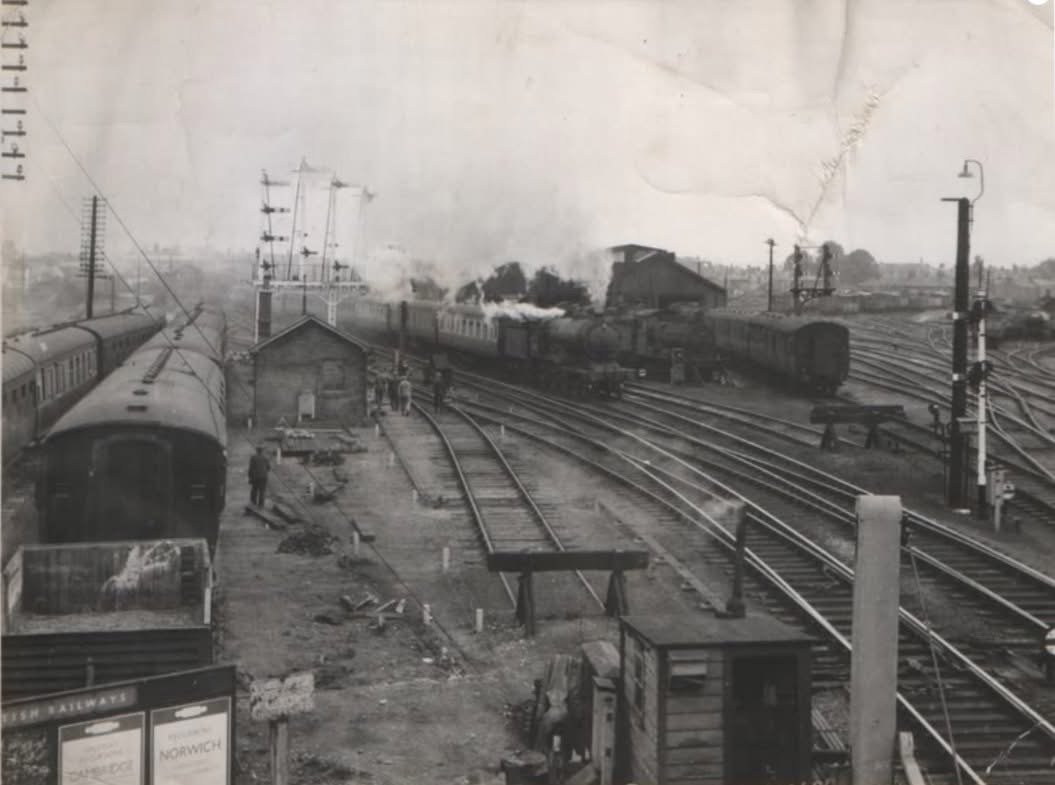
King’s Lynn station’s sidings once occupied the site where the present-day supermarket, car park, and fuel station now sit.
Year & Photographer unknown.
Year & Photographer unknown.
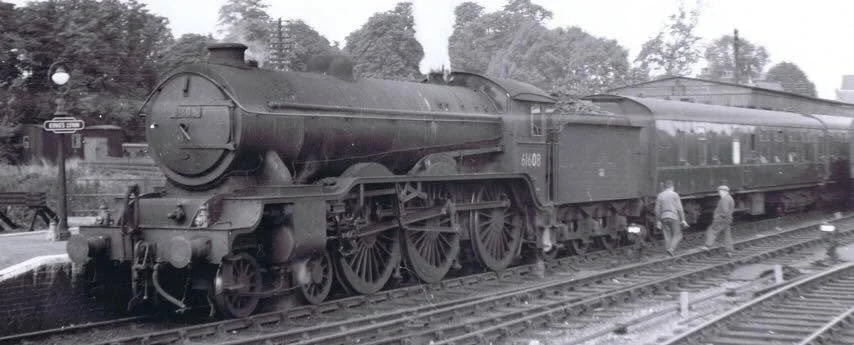
Express to London, 61642, Kilverstone Hall, leaves King’s Lynn. 1954.
King's Lynn and area Model by J T Colquhoun
Ian Allen
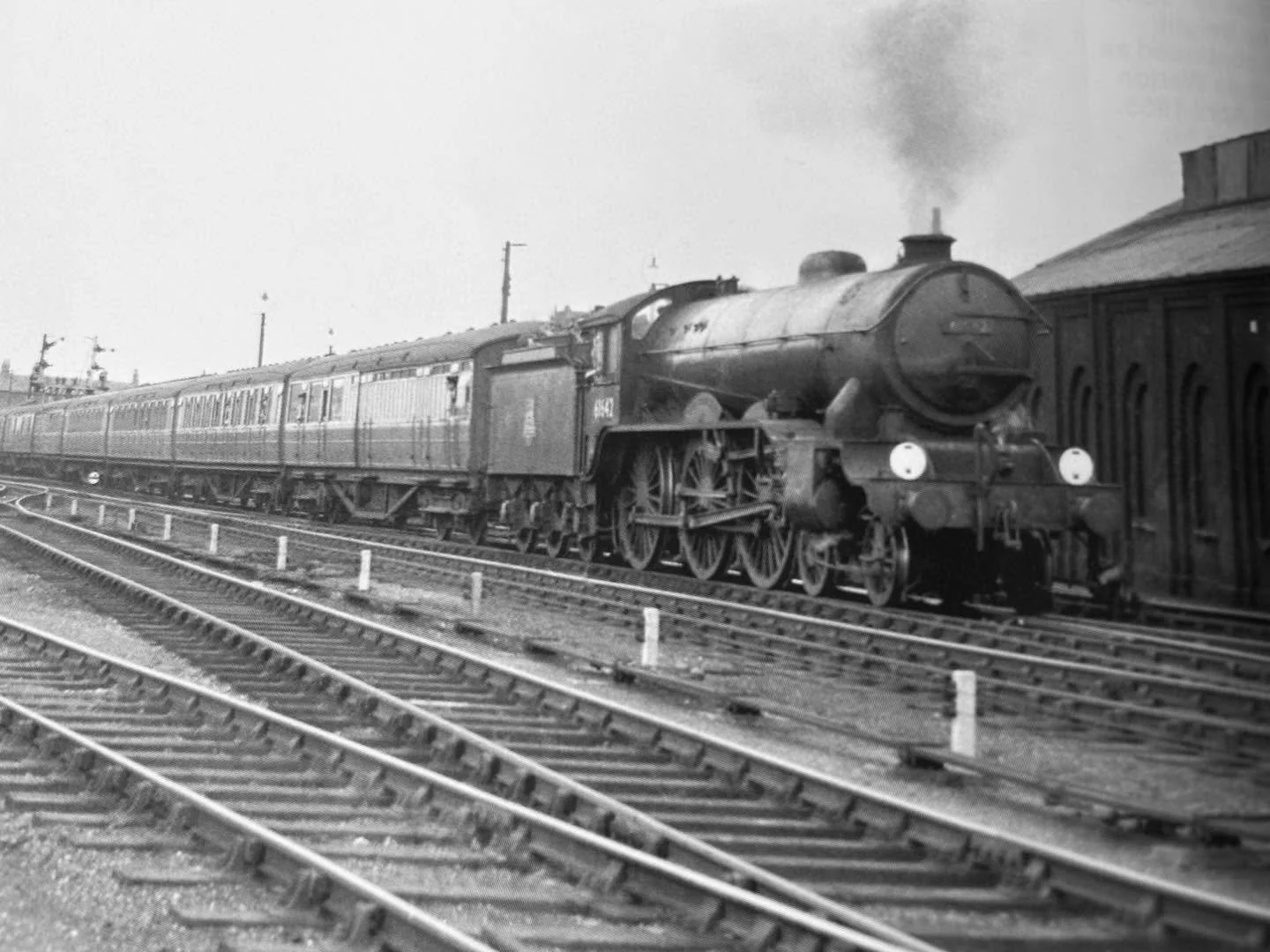
Year & Photographer unknown.
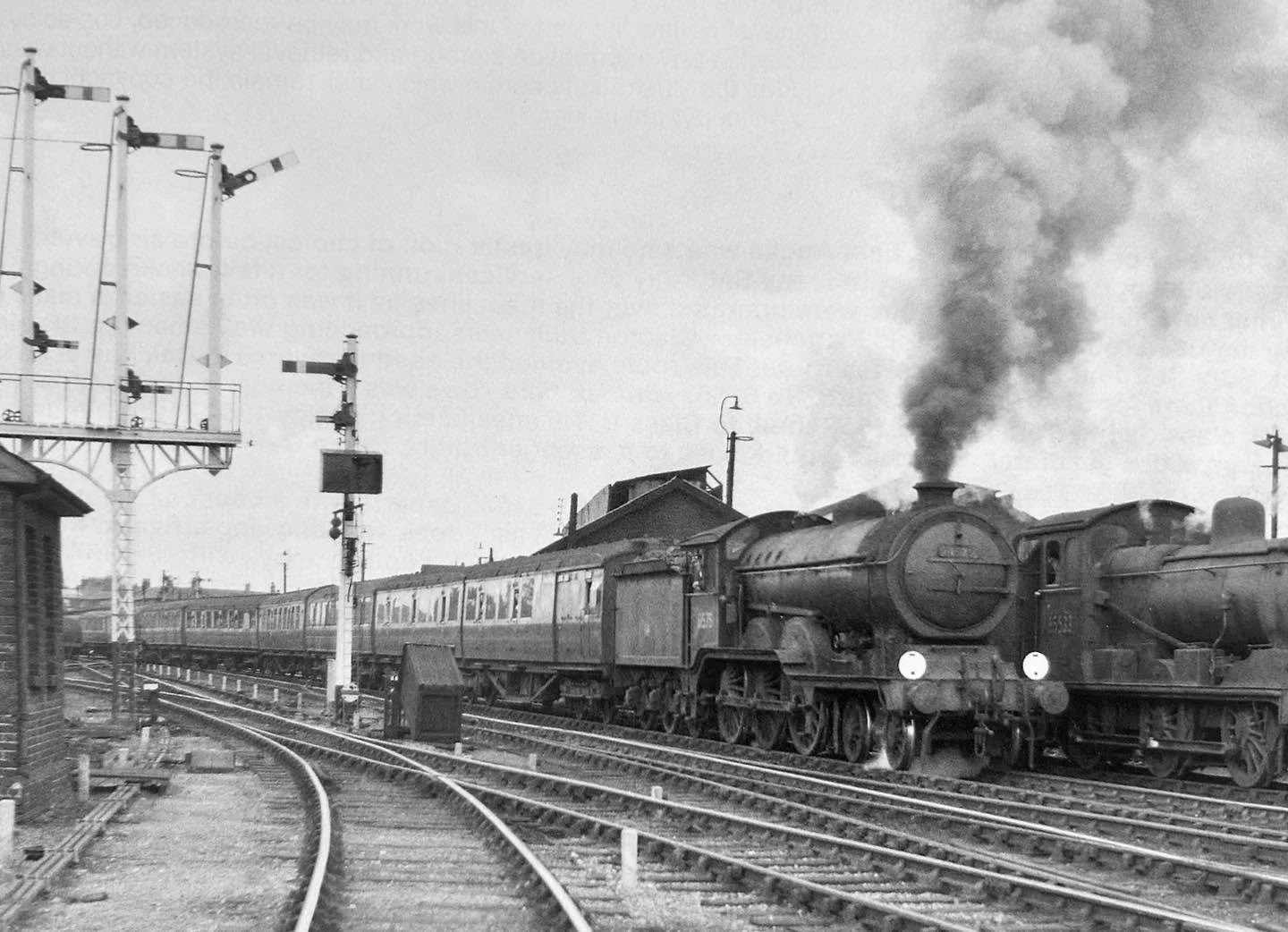
Year & Photographer unknown.
Middleton Towers bound service at the King’s Lynn turnaround point.

©Martin Addison / Kings Lynn-Wikimedia
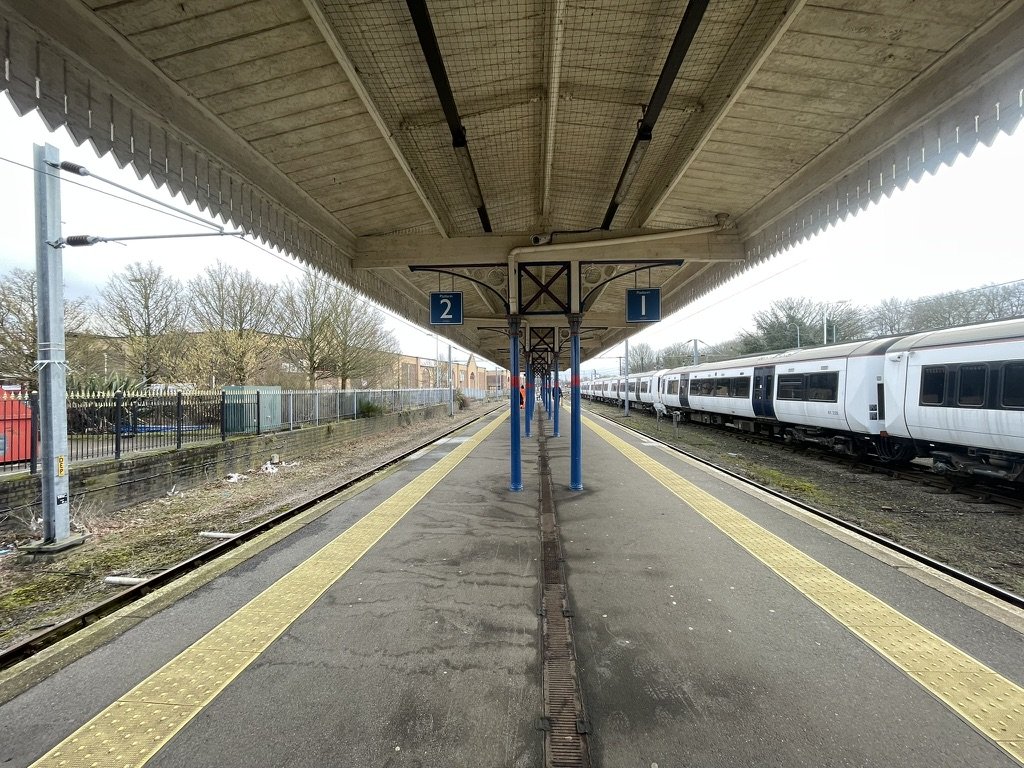
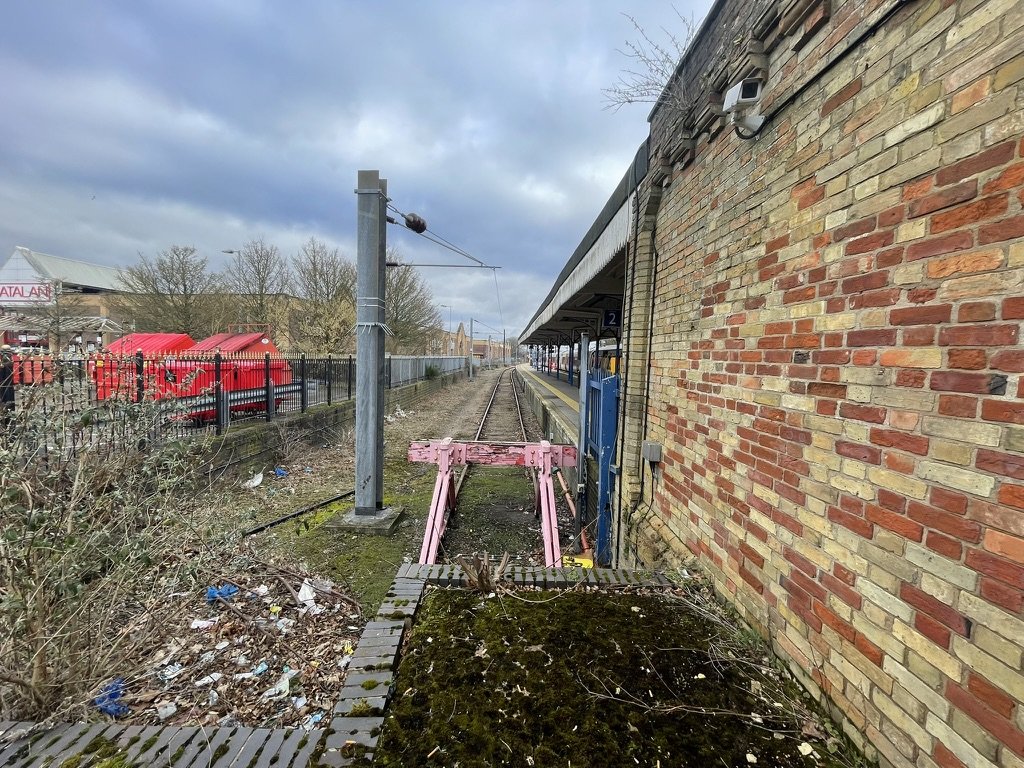
King’s Lynn railway station, platforms present day.
In the past, Dereham trains used what’s now Platform 2 at King’s Lynn station for departures. Trains to Hunstanton also departed from this platform. Currently, Platform 2 is reserved for stable trains and peak-time departures to London King’s Cross. Platform 1 is the most frequently used platform for London-bound services at King’s Lynn.






King’s Lynn Junction
King’s Lynn Junction Historic Maps.


Thanks to the ©National Library of Scotland.
Once departing from King’s Lynn station, the trains swiftly approach King’s Lynn Junction, where the Docks branch intersects just before the Tennyson Avenue level crossing. At this junction, the Hunstanton line veers off to the left, followed by the Lynn, Ely, and Cambridge line to the right. The Dereham-bound line continues on a southeast trajectory towards Middleton Towers.

Year & Photographer unknown.
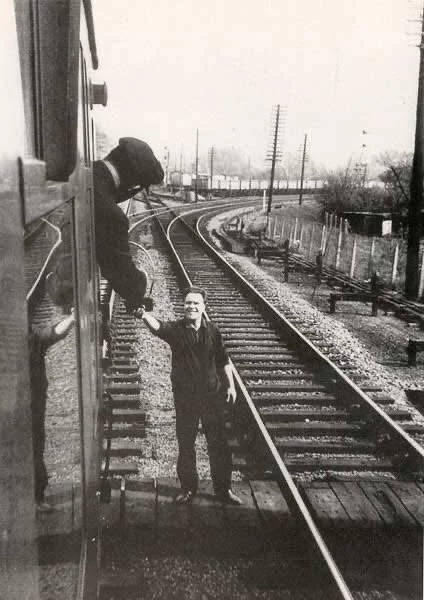
Year & Photographer unknown.
A freight train with double engines has just arrived at King's Lynn junction from Middleton Towers via the Dereham branch.
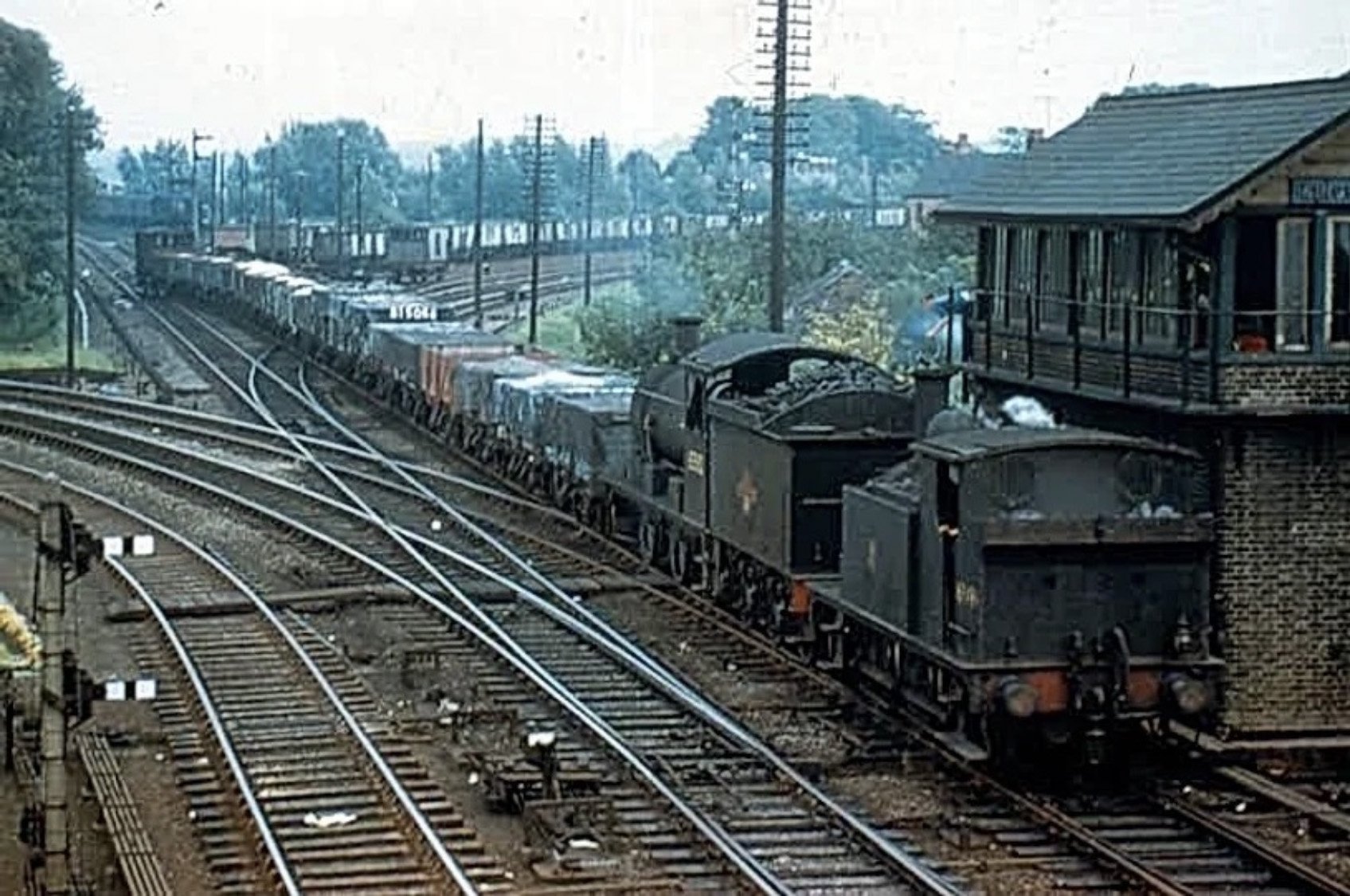
Year & Photographer unknown.
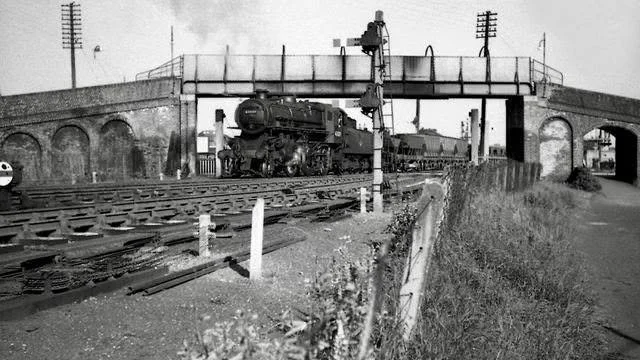
King's Lynn and area Model by J T Colquhoun
A freight train, specifically identified as 37023, is currently on its return journey after loading silica sand at Middleton Towers.

Thanks to Martin Addison via Geograph
Attribution-ShareAlike 2.0 Generic(CC BY-SA 2.0)
King’s Lynn junction after the Hunstanton branch had been ripped up.

Year & Photographer unknown.
The King's Lynn Junction looks quite different in 2020 compared to the past. The Hunstanton branch junction is no longer present, and a considerable number of sidings from the Dereham branch have also disappeared.
The Dereham line, which appears to continue straight ahead, serves as a resting place for 8-car units that have been in operation between King's Lynn and Cambridge since 2020. Additionally, it is still utilized as a freight line up to Middleton Towers.
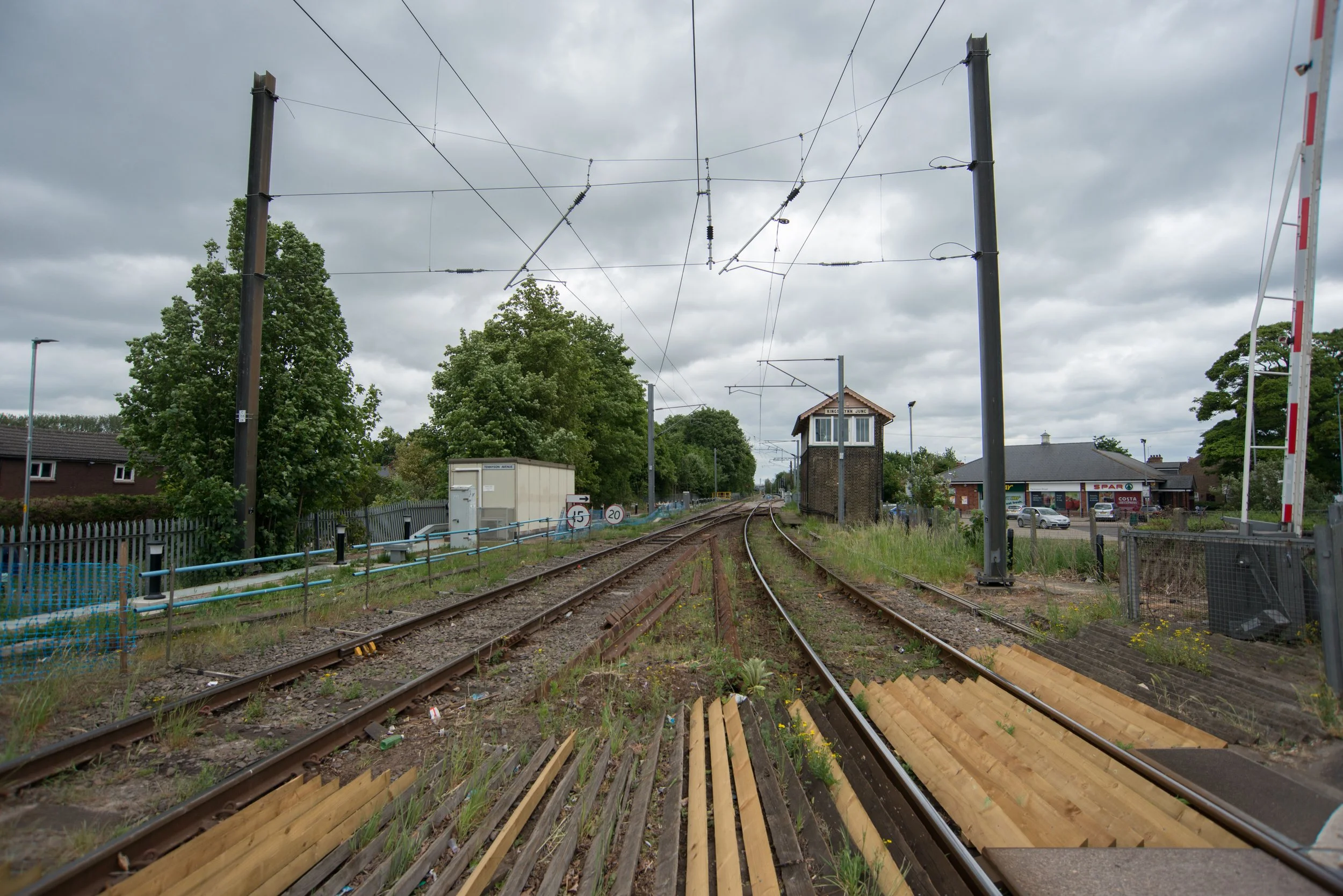
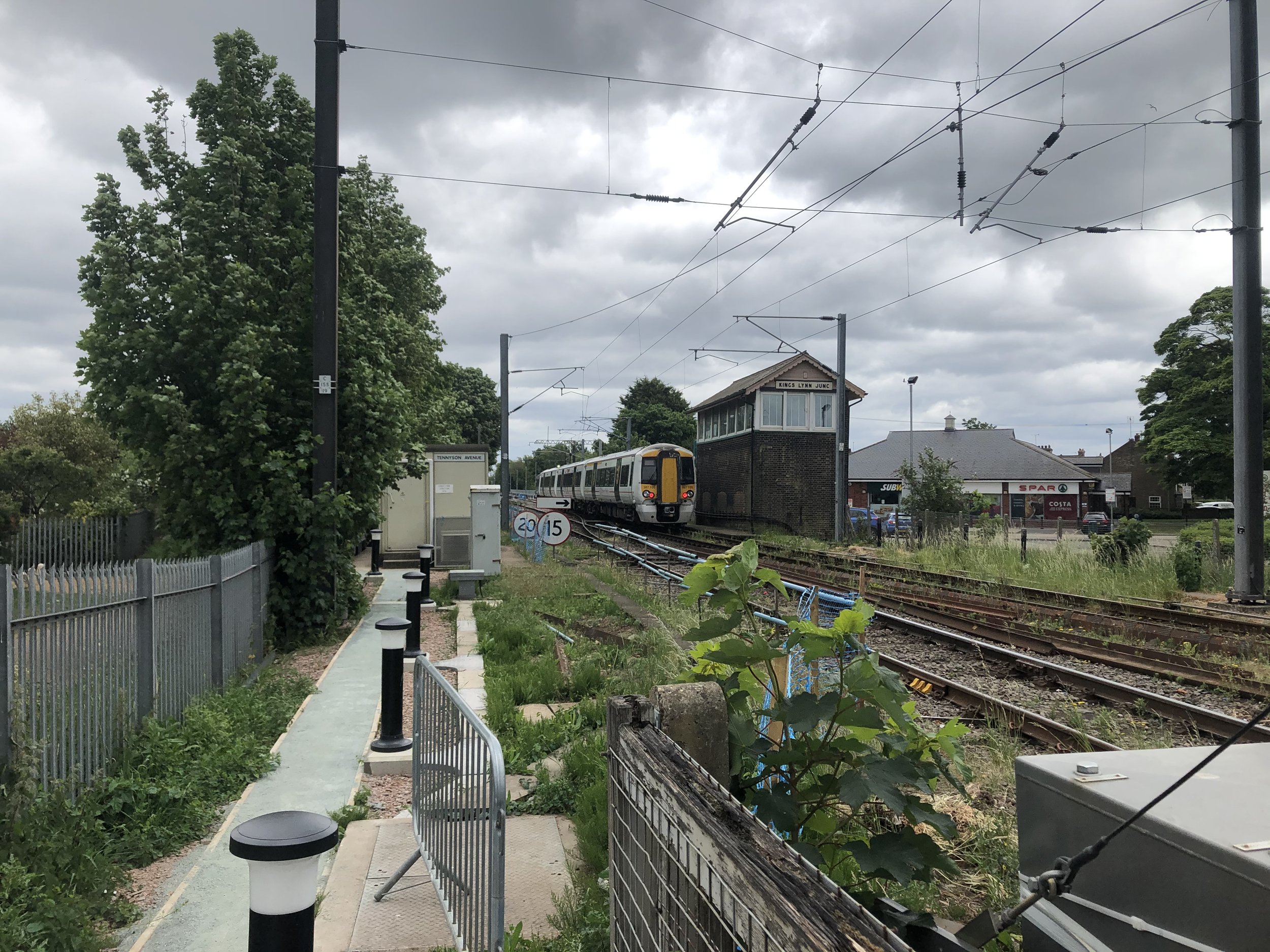
The Lynn Dereham line is still in use as far as Middleton Towers, and, as seen here, the freight service uses the old King’s Lynn Docks branch line as a turnaround point.
The left-hand track is the main Lynn London-bound track, whilst the track to the right is where the freight services head towards Middleton Towers from the old docks line.

Aerial views.
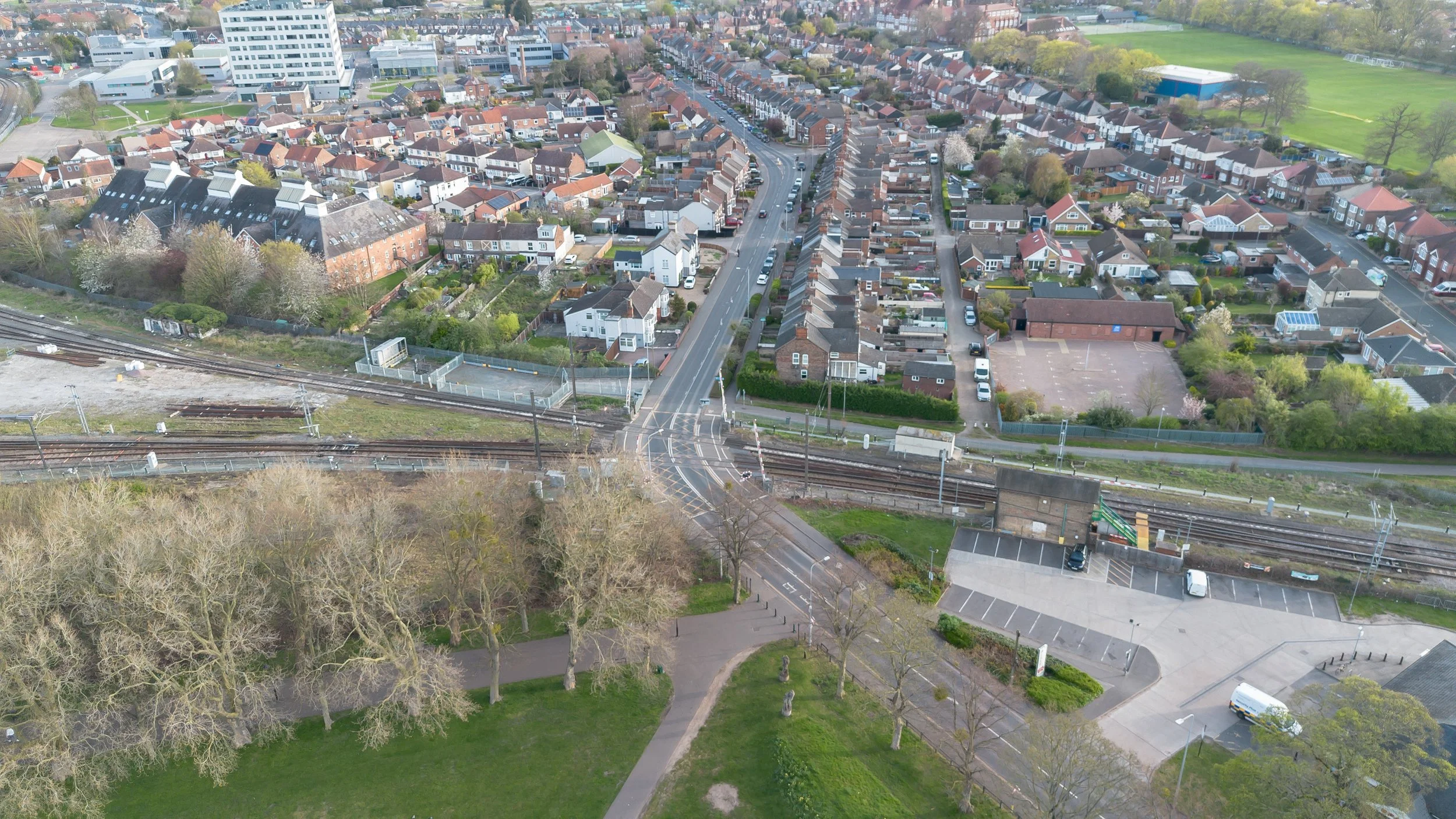
Off to Middleton Towers
With thanks to King's Lynn and area Model by J T Colquhoun ©Ian Allen J19 64640 is assisted by an unidentified J69 with a sand train between King’s Lynn and Middleton Towers.
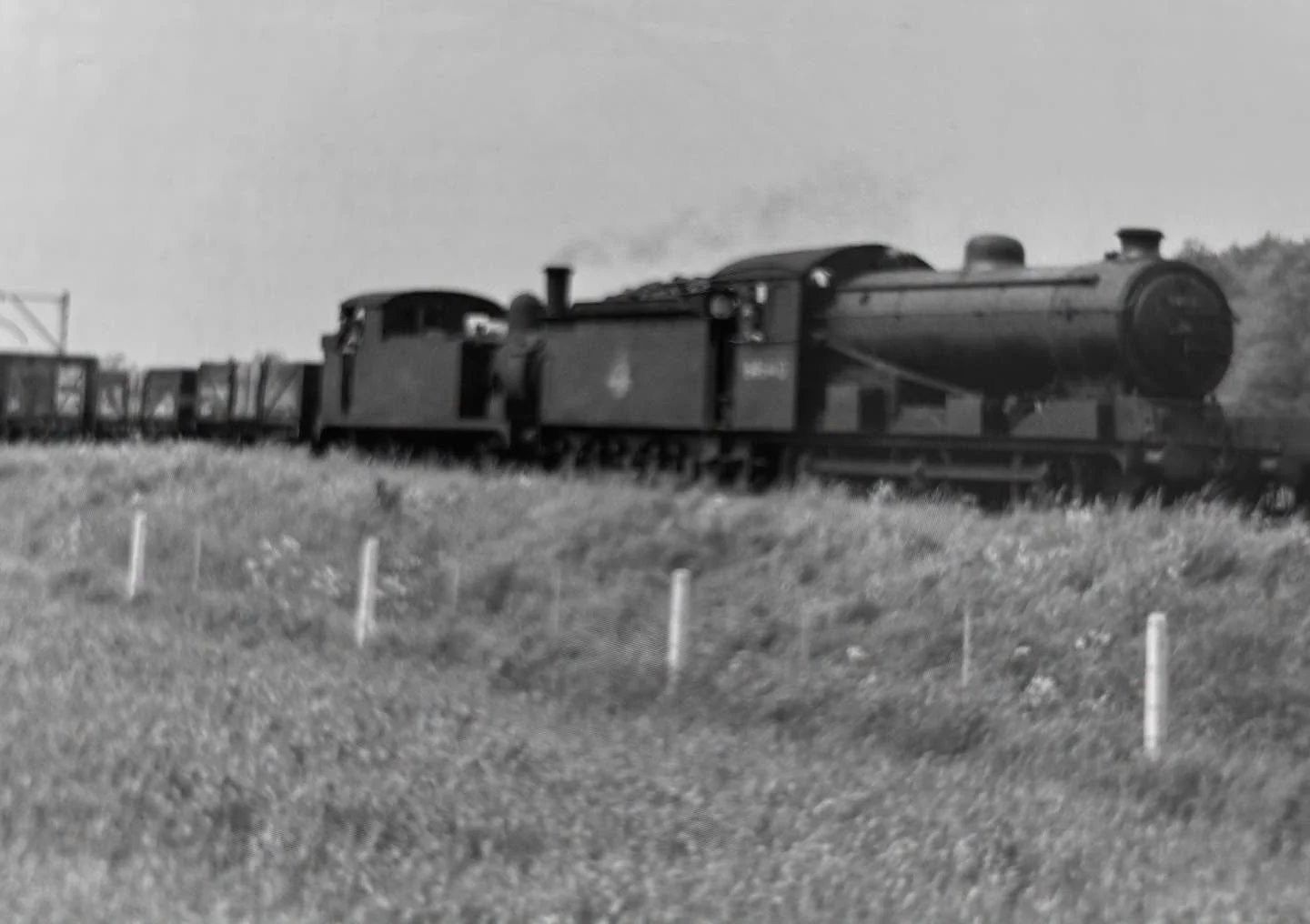
The train continued on its route after passing Kings Lynn Junction, making its way to the next stop at Middleton Towers. This photograph of the area was captured in 2020 from the footbridge located at the Hardwick Industrial Estate.
The image shows the train track running alongside the estate, primarily used for freight transportation.

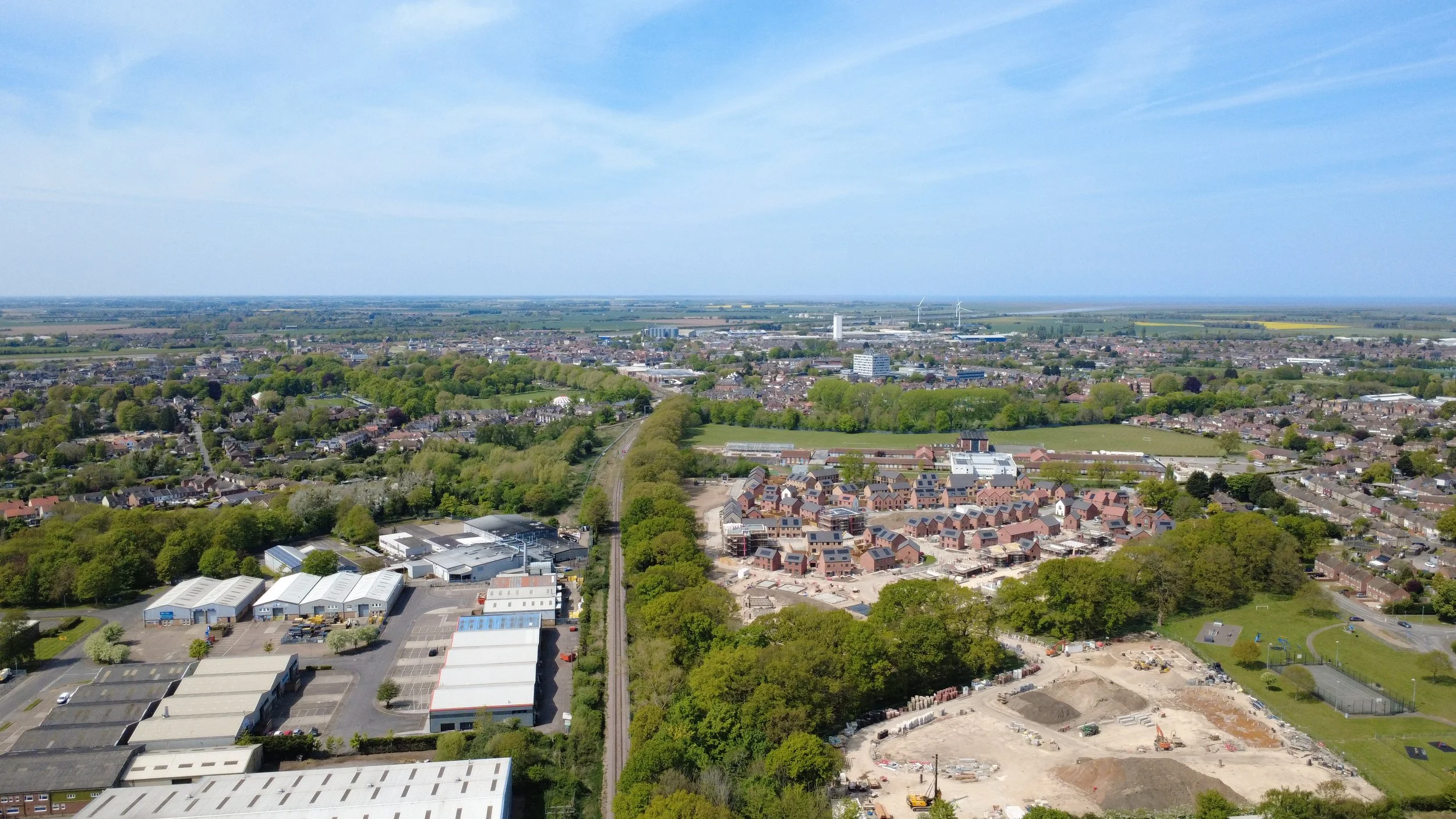
Drone footage donated to me showing the old Dereham line with the iron bridge facing towards King’s Lynn Junction.
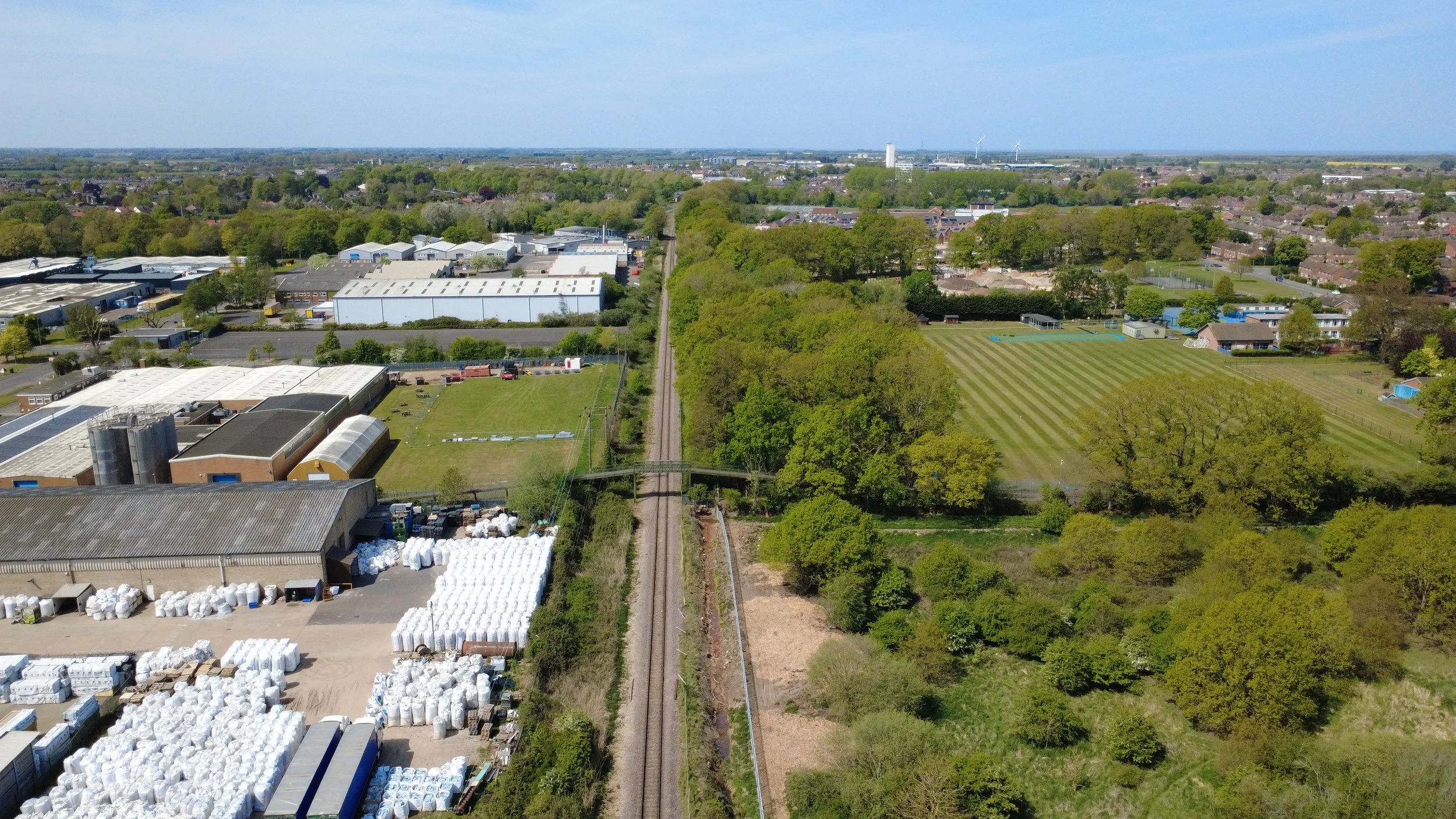
The Lynn Dereham line with King’s Lynn junction and the historic town in the distance, and also the River Ouse and the Docks in the far distance.
The iron bridge that takes pedestrians over the railway between the Hardwick industrial estate and off towards the housing around the town.
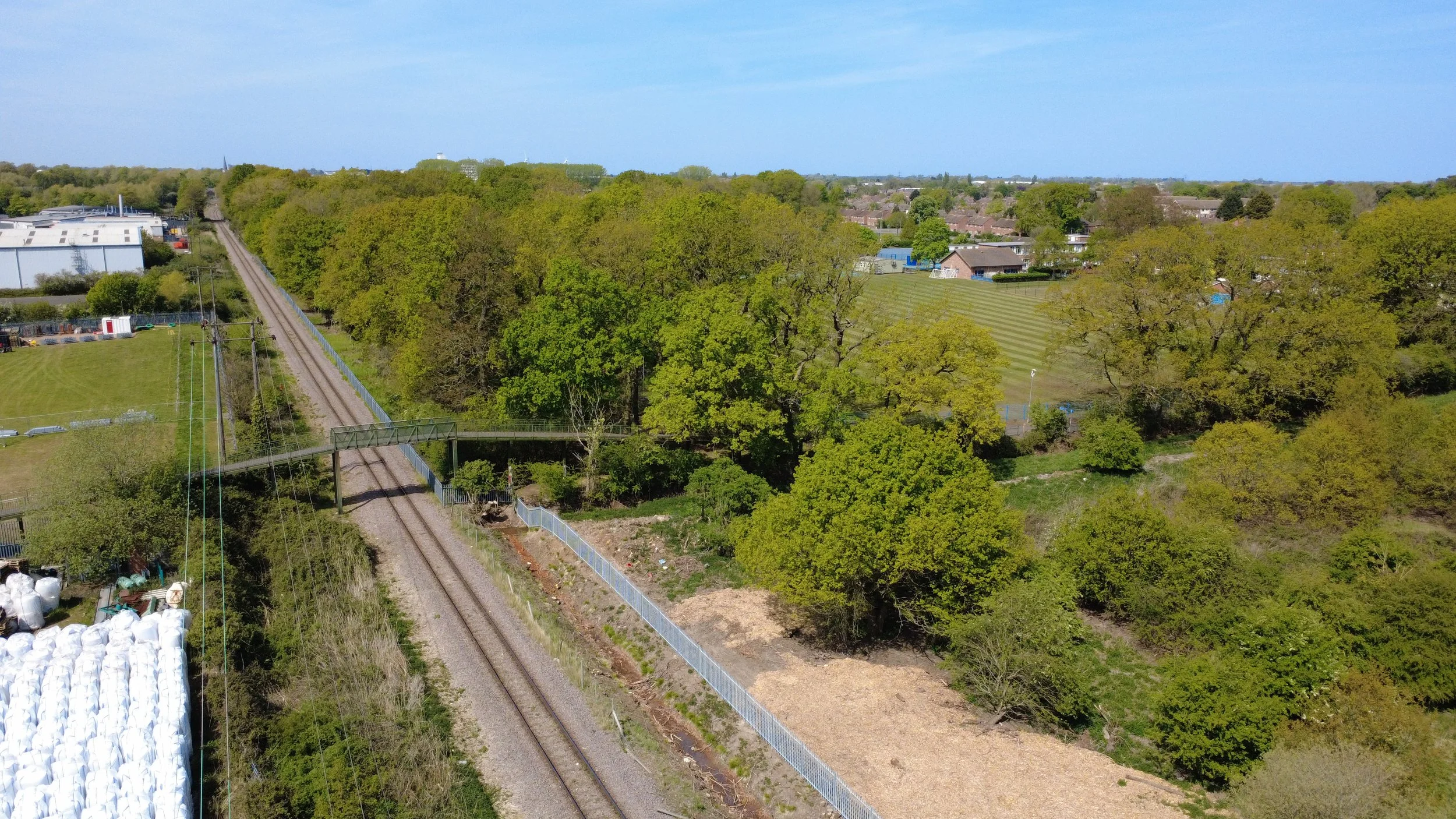
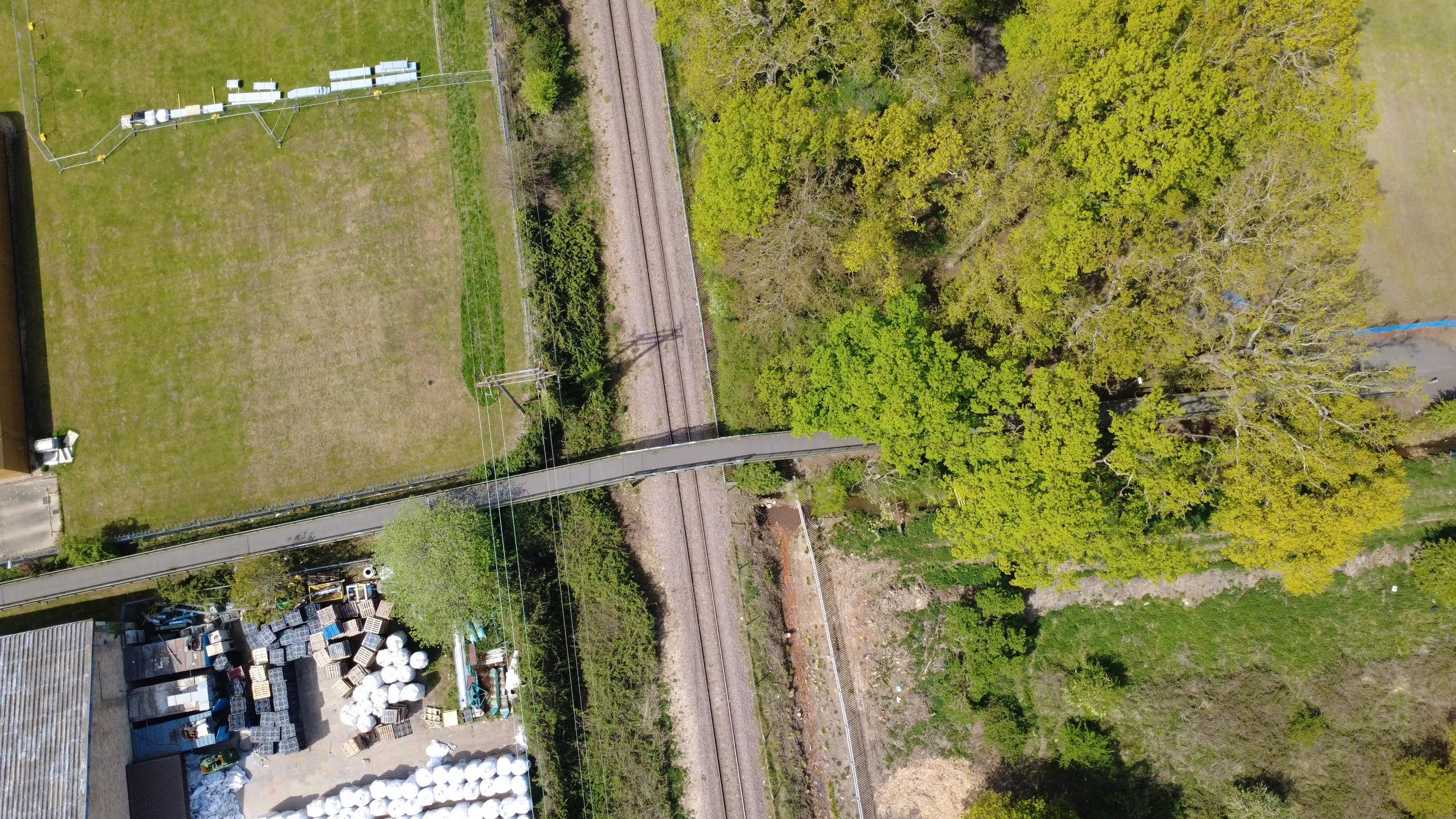
Looking towards Middleton Towers.
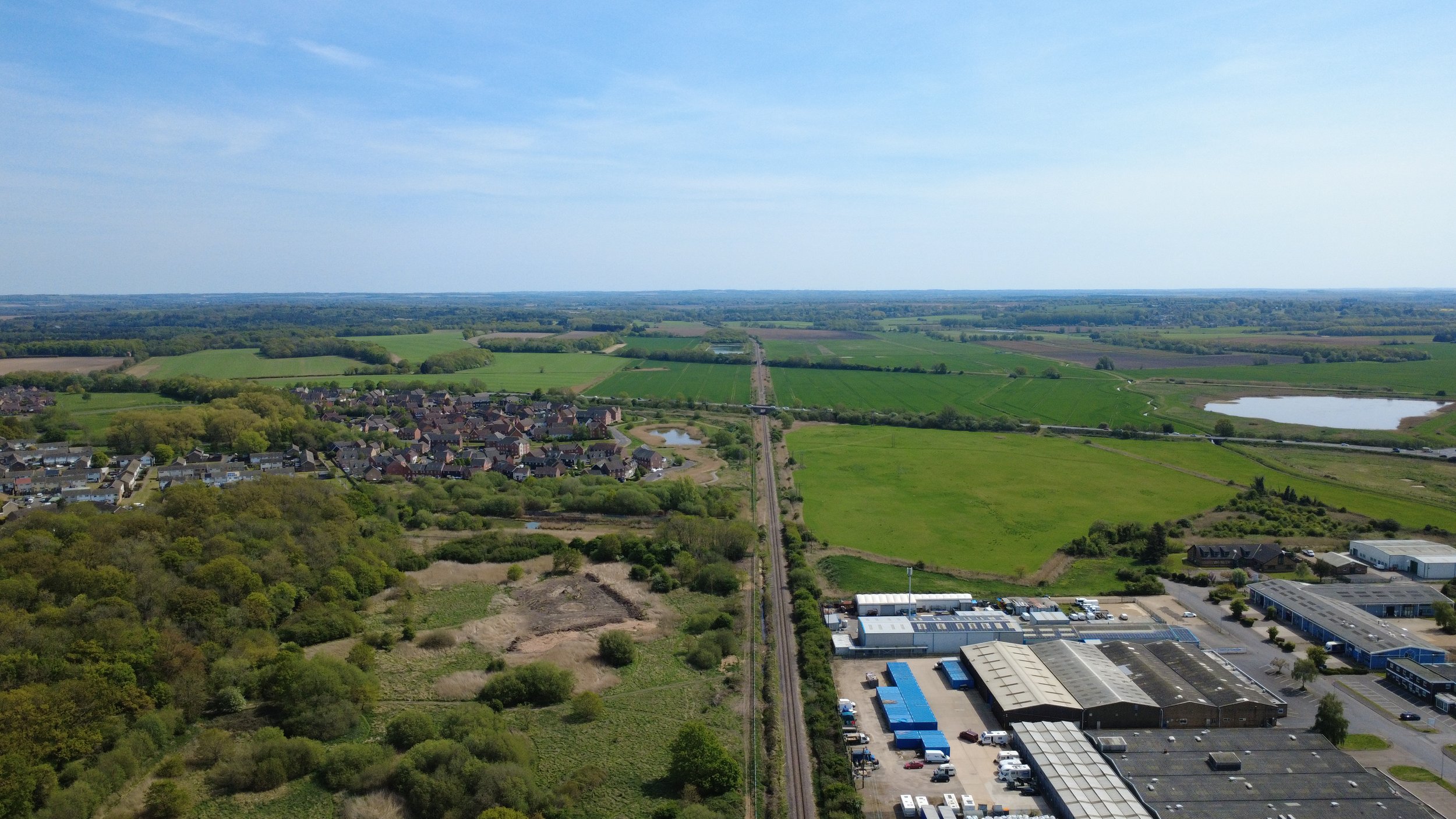
The Dereham line now passes under the A149 Bypass between the hospital and the Hardwick estate.
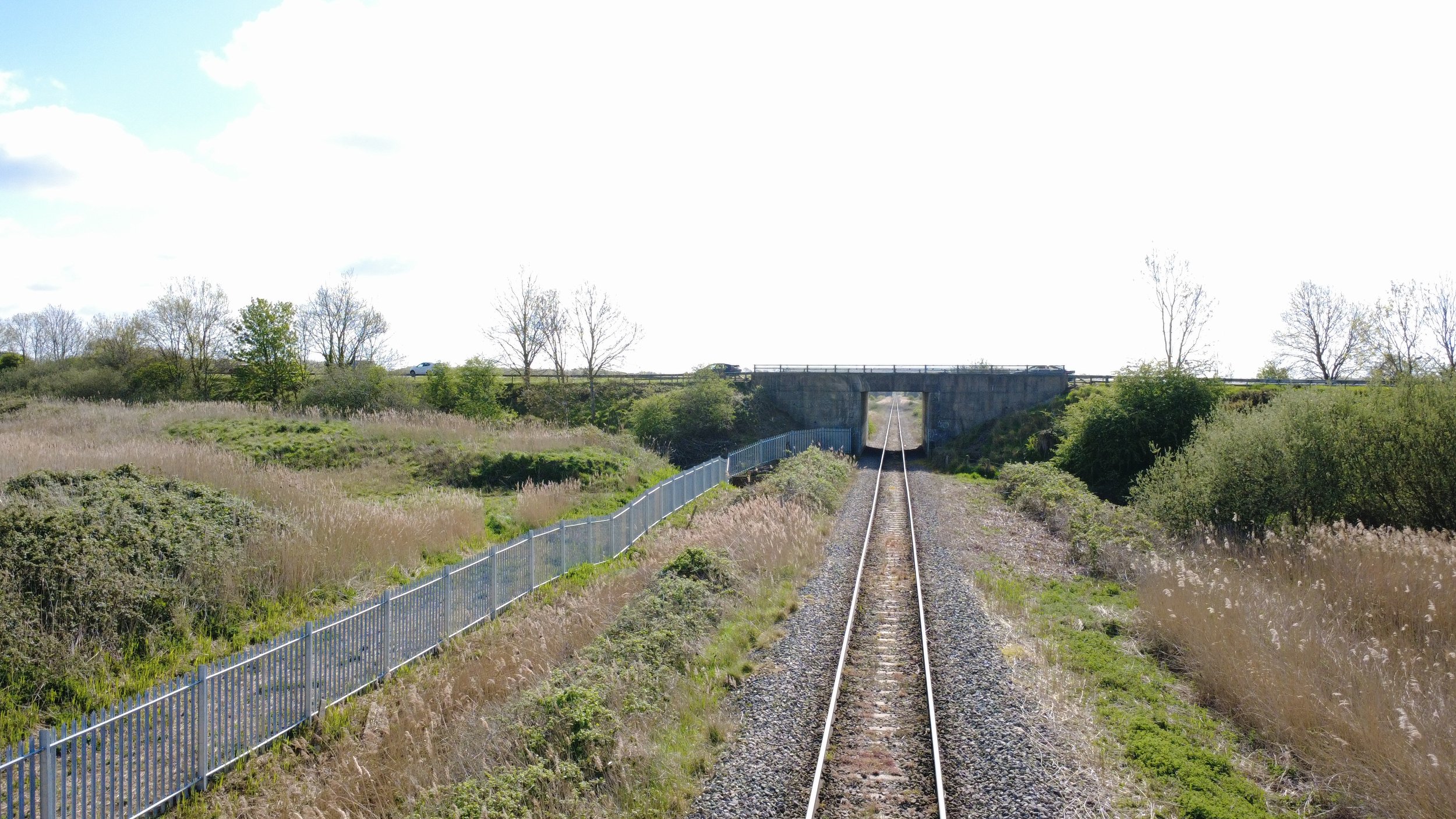
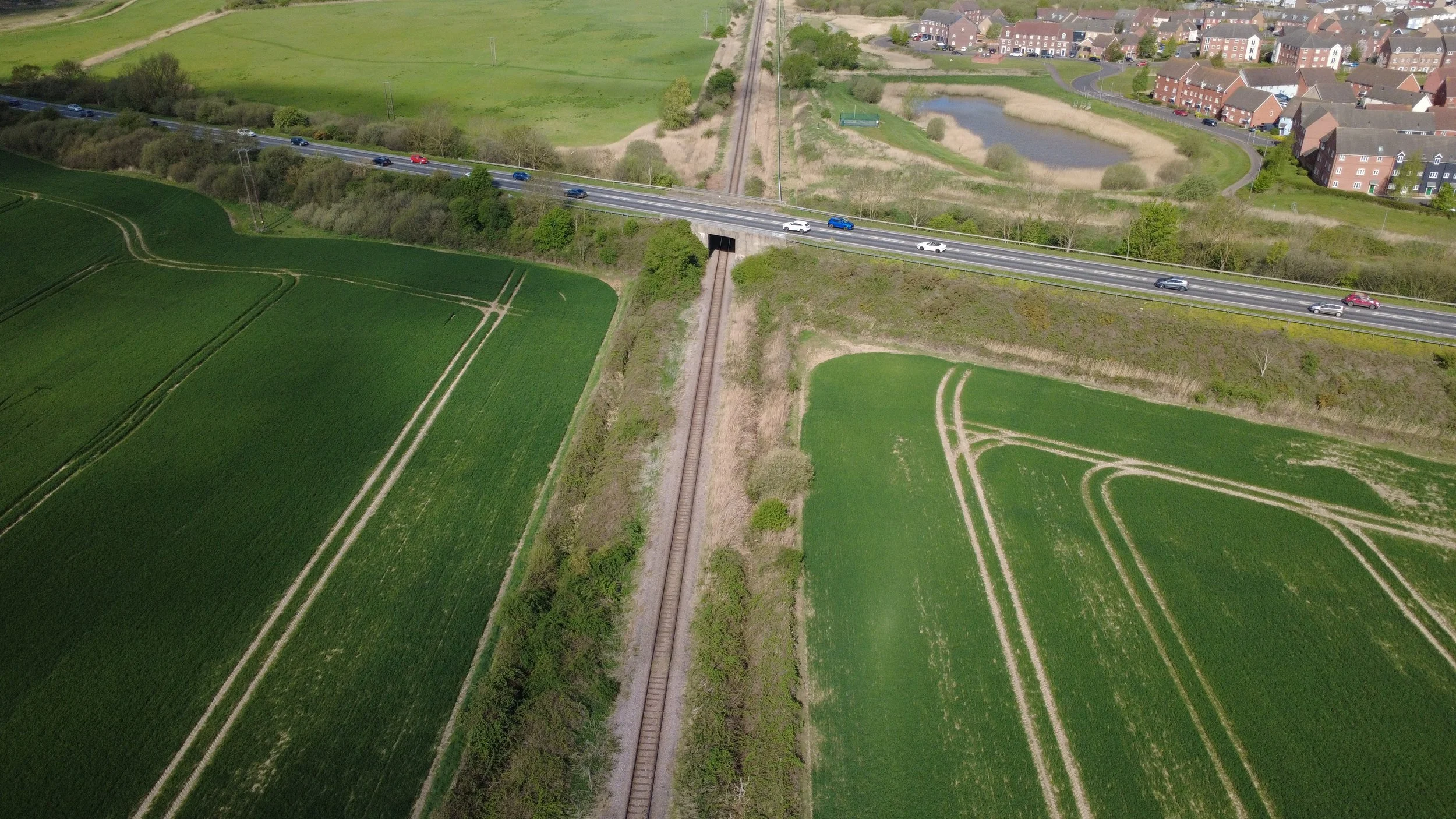
Donated to Norfolks disused railways.
Many thanks
After passing under the A149 bridge, the railway line would have passed under the M&GN South Lynn to Fakenham line.
The cross-over bridge was just after the Second mile marker from King’s Lynn.
The Lynn Dereham line and the M&GN cross-over bridge.
When the Lynn to Dereham line was constructed in 1846, this bridge would not have been built. Initially, the Lynn Fakenham line diverged from King’s Lynn’s main station. Between 1885 and 1886, the Lynn avoiding line was constructed, diverting the Lynn Fakenham line from the main town station to a newly built station at South Lynn via a junction at Bawsey. Part of this construction involved this bridge and Gayton Road station.
The cross-over bridge maps showing the line before and after the construction of the Lynn avoiding line.


Thanks to the ©National Library of Scotland.
I want to express my gratitude to Andy F for sharing these amazing pictures with us through Geograph.
The initial image shows the Lynn Dereham line passing beneath the disassembled bridge that previously held the South Lynn to Gayton Road M&GN Train to Fakenham.
Lastly, there are two images of a farm crossing, which I assume were taken right after the bridge.


Attribution-ShareAlike 2.0 Generic(CC BY-SA 2.0)
The following images were provided by Alex Brammer from Middleton Towers Restoration Group, who are working towards restoring Middleton Towers Station.


©ALEX BRAMMER-MIDDLETON TOWERS RESTORATION GROUP
The following images were provided by Steve Heywood.
Many thanks, Steve.


©STEVE HEYWOOD
Aerial shots of the Cross over bridge.
These pictures were donated to Norfolk’s disused railways.
Many thanks.
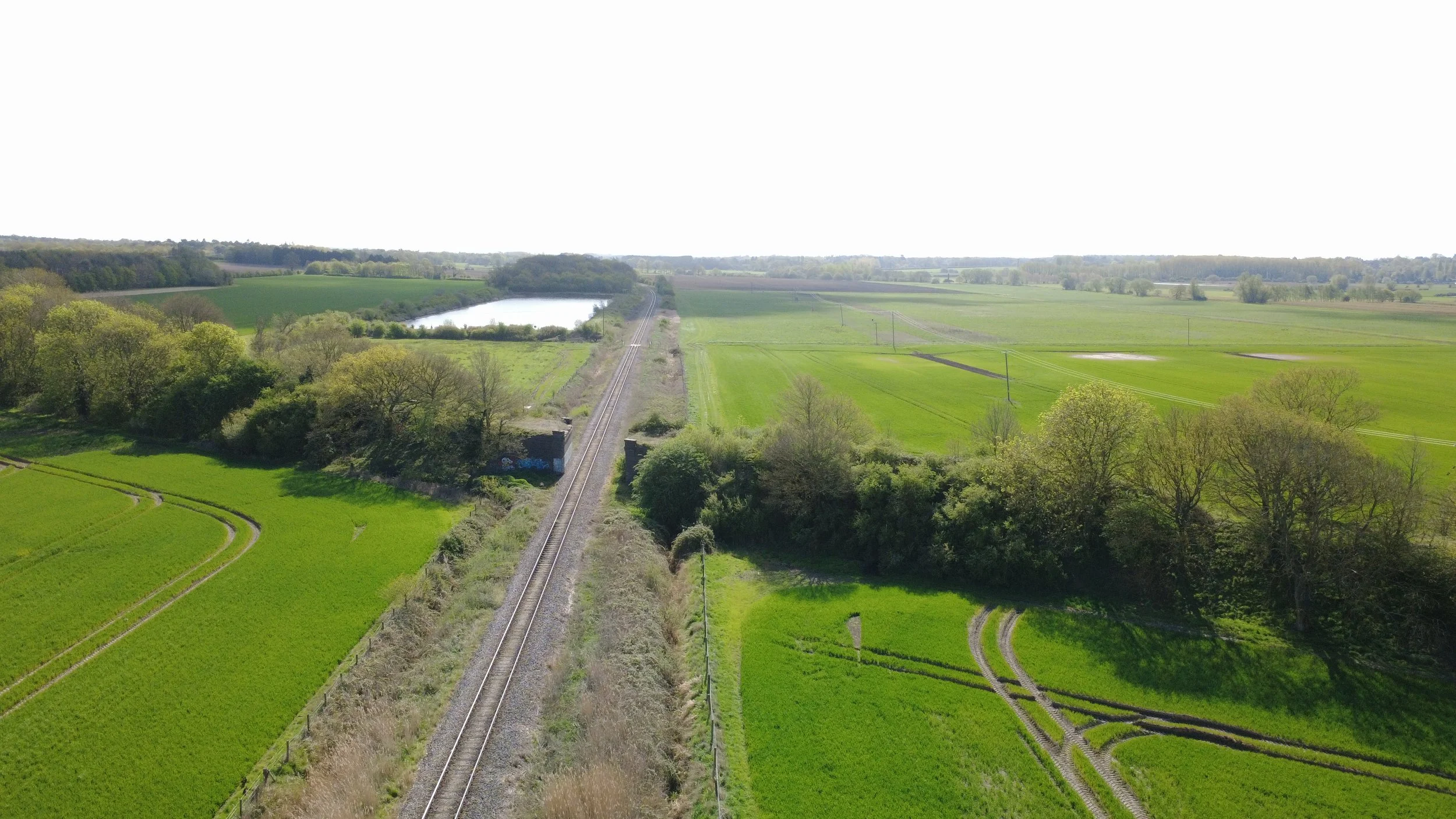
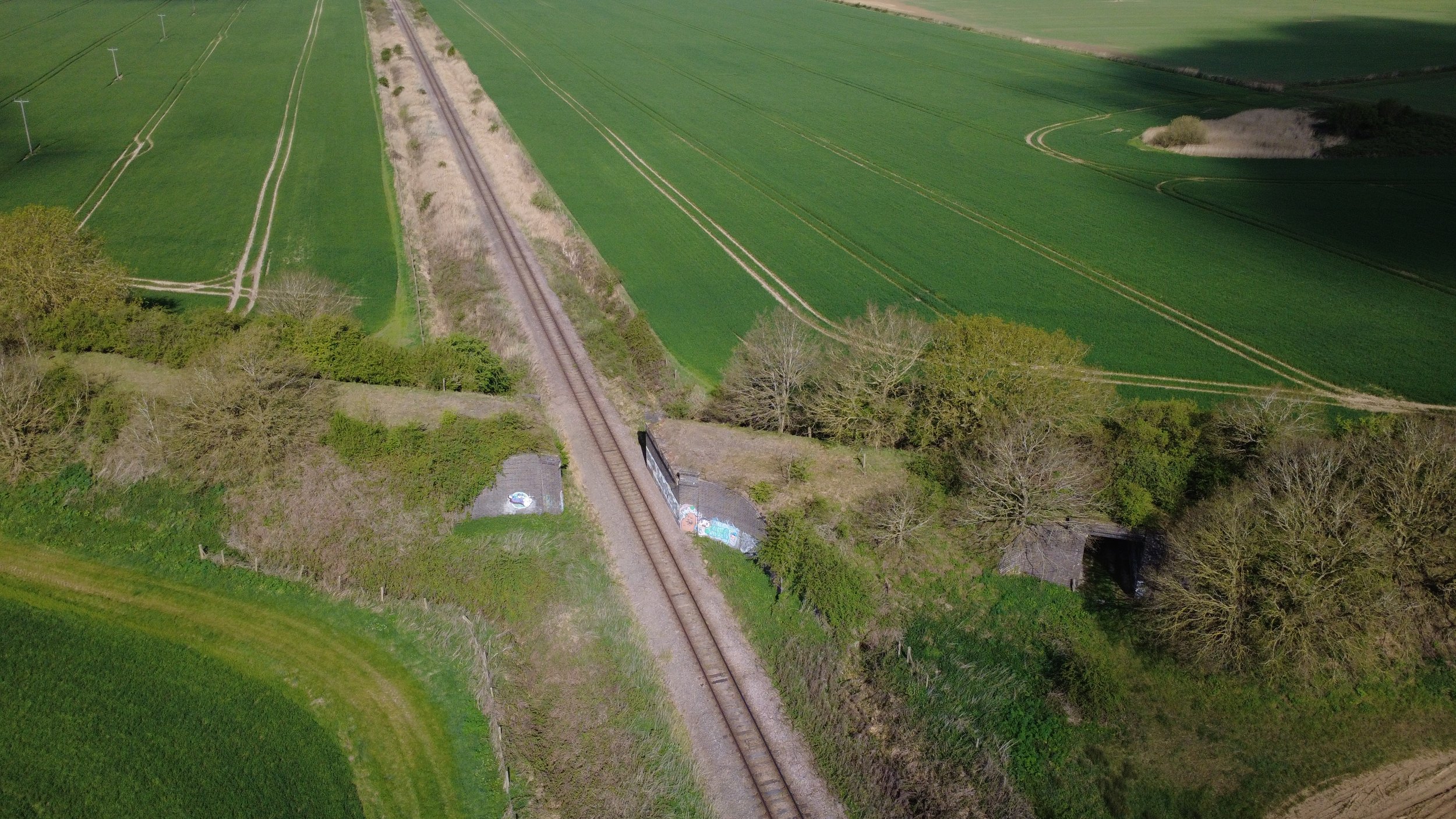
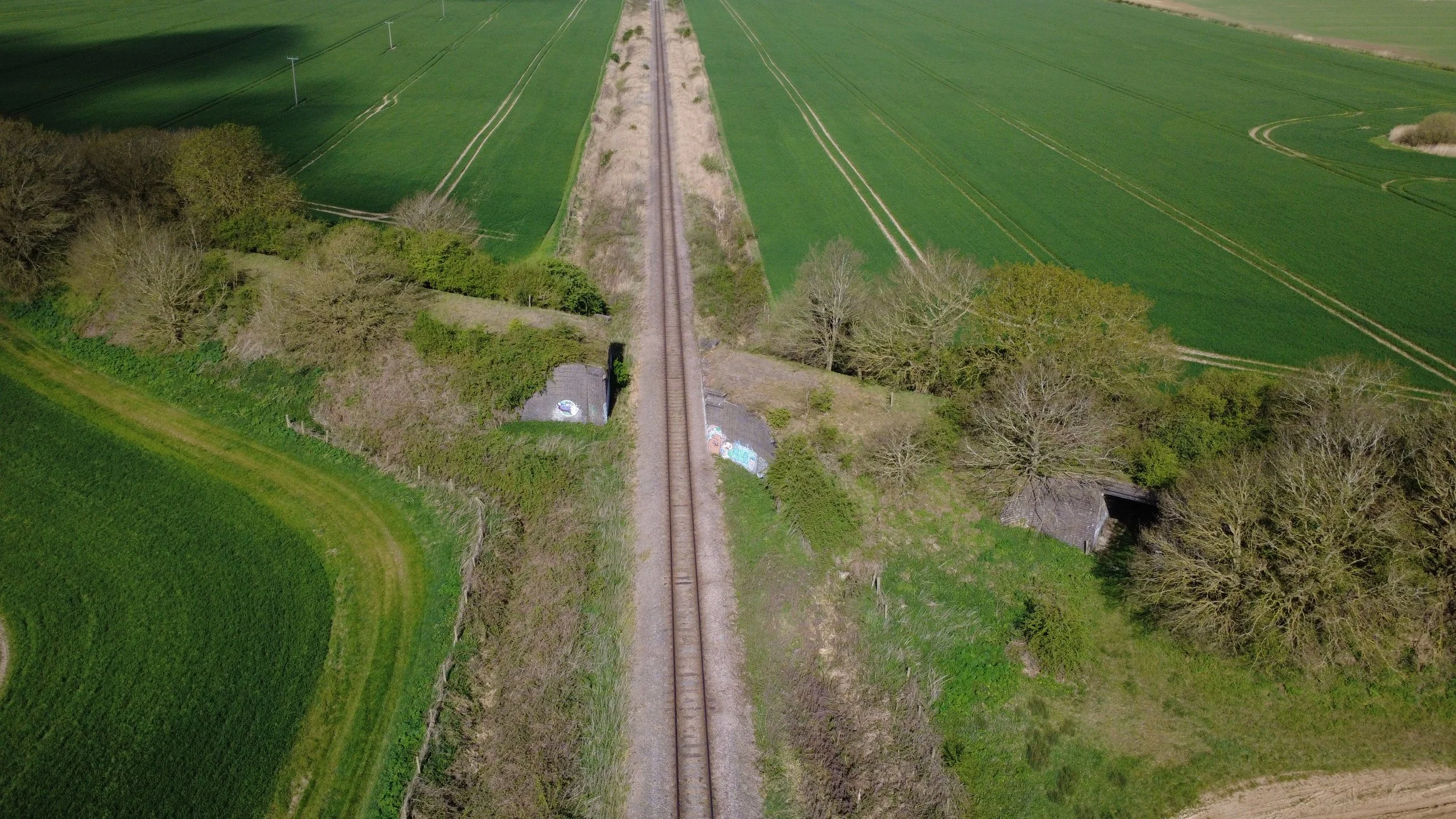
Top-down view of the old bridge with the old Lynn Fakenham line track bed seen crossing over the Lynnn Dereham line.
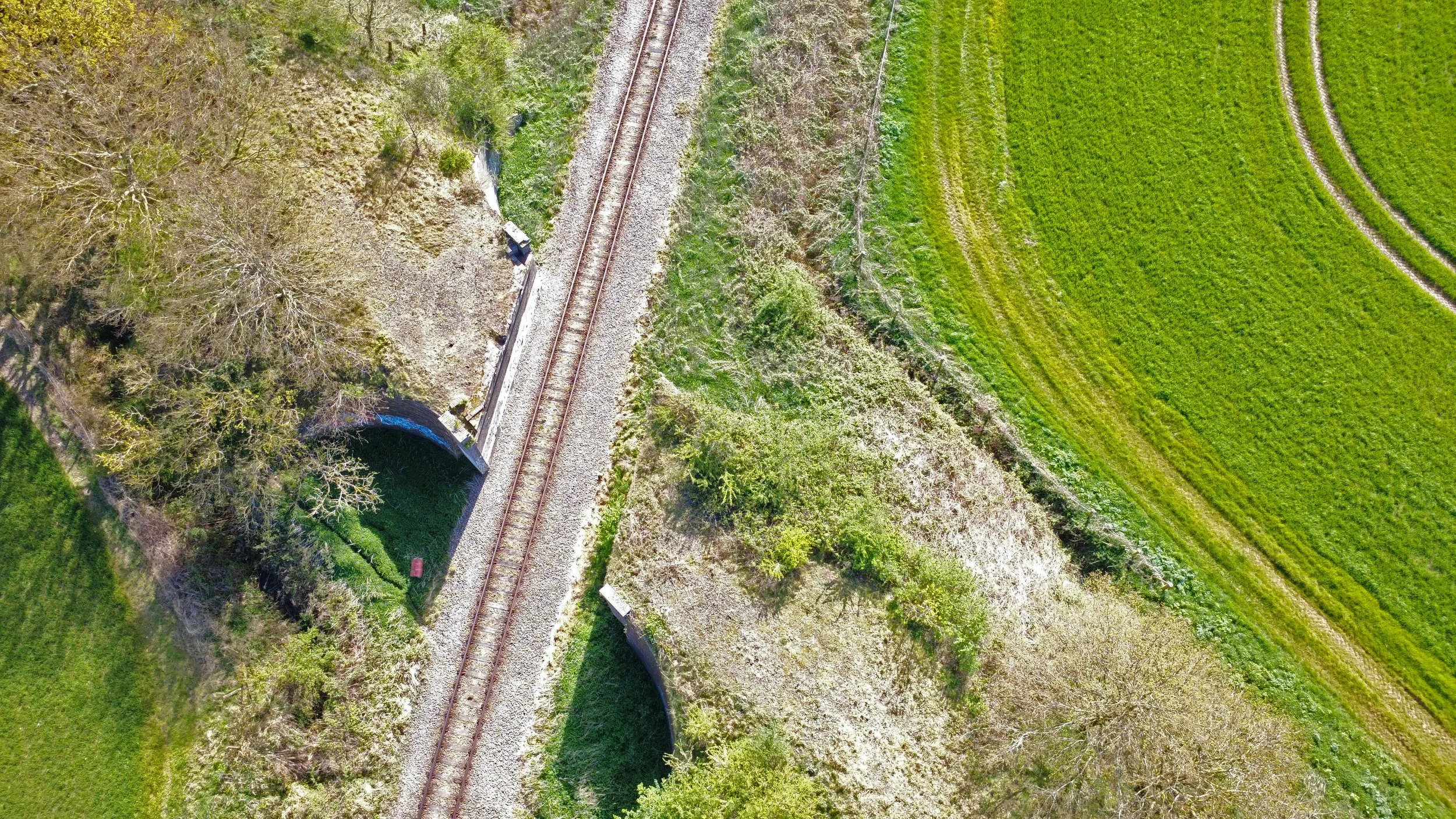
After passing the cross-over bridge the Lynn Dereham railway line headed towards its next destination.
Middleton Towers Station.
Drone shots looking towards King’s Lynn, taken from just outside Middleton Towers station

Class 66 leaving Middleton Towers.
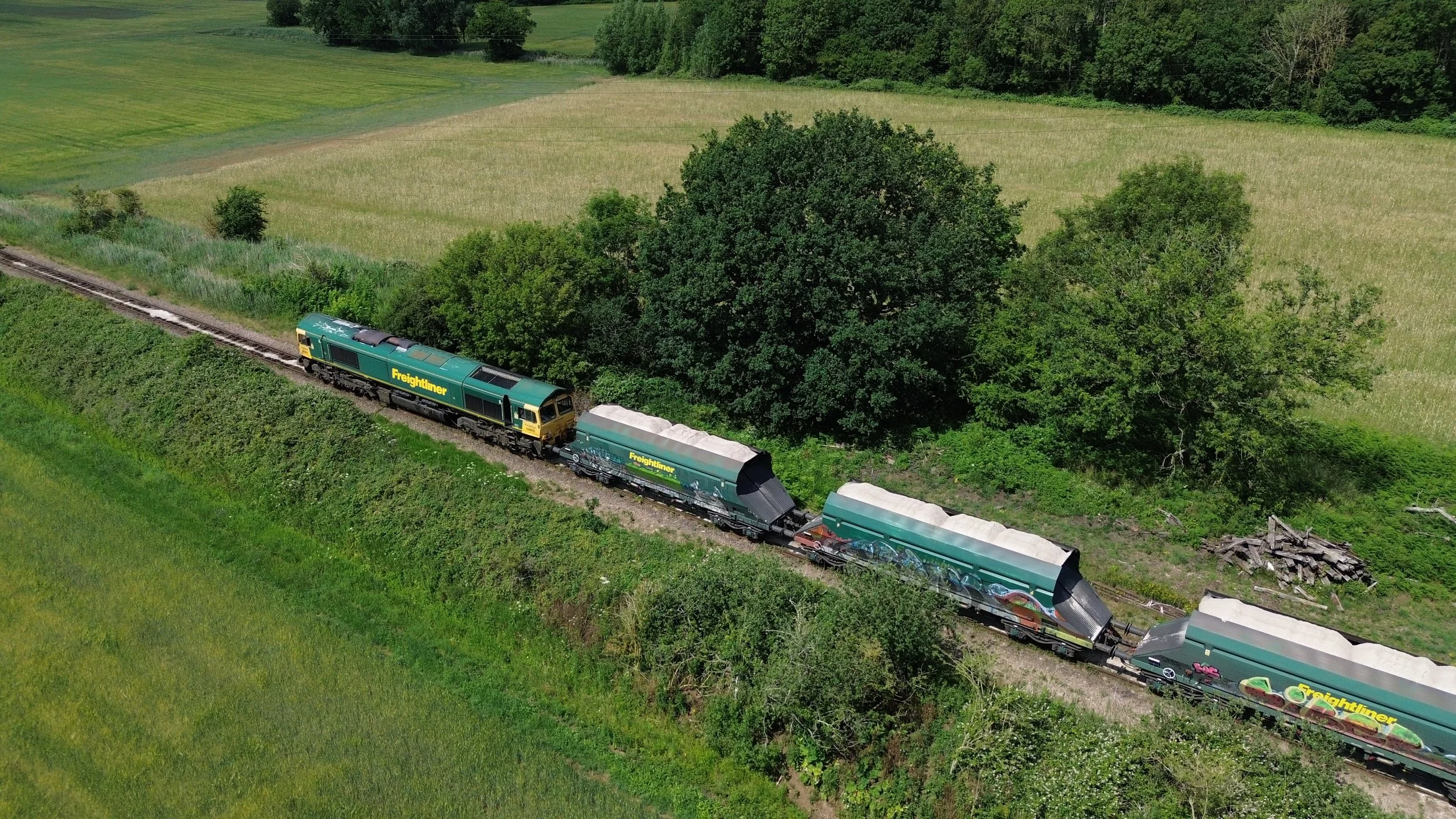
60095 leaving Middleton Towers.
PART TWO
Please join us for an in-depth look at Middleton Towers station and its restoration.
Thanks to the Middleton Towers restoration group.
Click here for the next page
MIDDLETON TOWERS
Many thanks to all who have donated pictures to this page.